





What is an a1c Wallet?
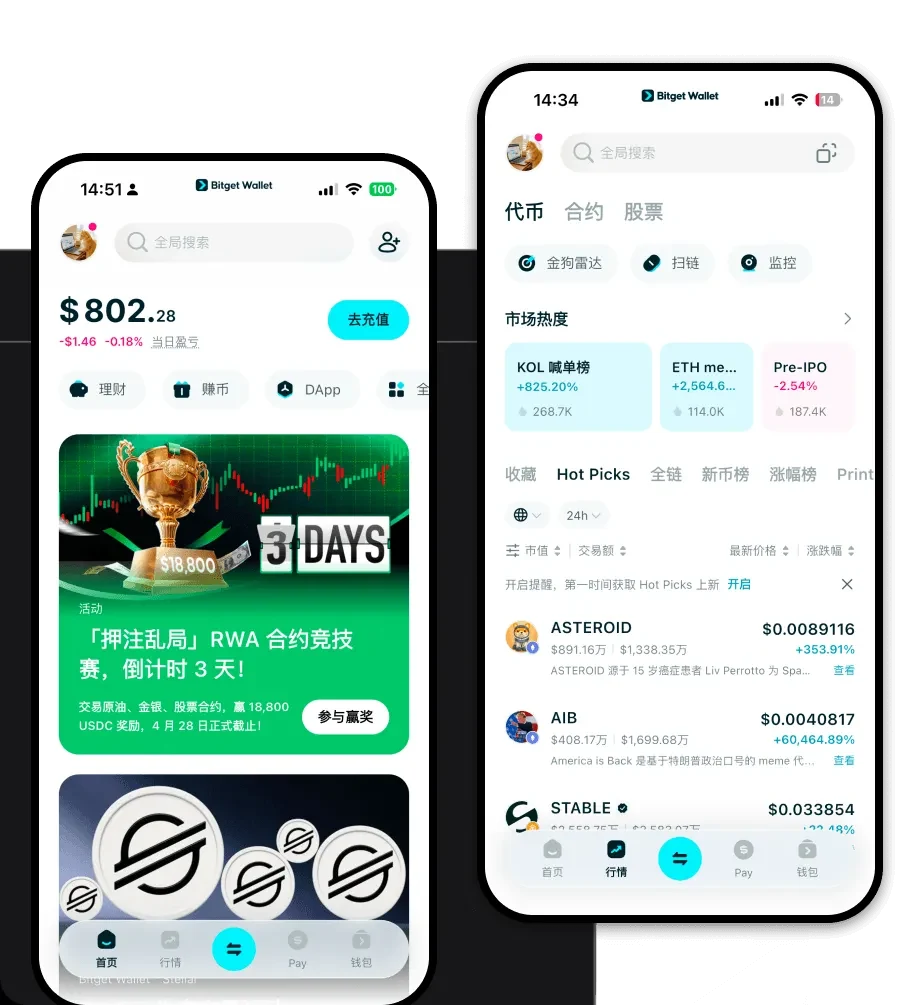
An a1c wallet is a digital interface that allows you to interact with the a1c token, an asset operating natively on the EVM (Ethereum Virtual Machine) blockchain. Because a1c is built on EVM architecture, it requires a wallet that can seamlessly parse smart contract interactions, manage gas fees, and display token balances in real-time. Are you looking for a reliable and secure crypto wallet for your a1c? Bitget Wallet will be your best choice. Trusted by 40 million users, you can freely explore Web3 on Bitget Wallet. Start your journey now!
Download Bitget a1c Wallet
To begin managing your assets, you need a robust gateway to the blockchain. We recommend that you download Bitget Wallet to get started. This application serves as your comprehensive portal to the crypto world, designed for both mobile and desktop users. Whether you are using an iOS device, an Android smartphone, or prefer a browser extension for your computer, Bitget Wallet offers a unified experience. It is a self-custodial solution, meaning you retain full control over your private keys and seed phrases, ensuring that your a1c tokens remain exclusively under your ownership. With support for over 130 public chains, it simplifies the complex task of managing multi-chain assets under one interface.
Why Choose Bitget a1c Wallet?
- EVM Ecosystem Compatibility: Since a1c is an EVM-based token, Bitget Wallet provides native support for smart contract interactions, ensuring you can swap or interact with DeFi protocols without compatibility errors.
- Advanced Meme-Coin Liquidity: As a1c is a community-driven meme asset, the wallet integrates with hundreds of decentralized exchanges (DEXs) to ensure you always have access to the best liquidity pools for your trades.
- Robust Security Architecture: With a $300 million user protection fund, Bitget provides an extra layer of security that shields your speculative assets from potential platform-level vulnerabilities.
- Optimized Gas Fee Management: The wallet features intelligent gas fee estimation and acceleration tools, crucial when trading highly volatile meme coins where transaction speed can be the difference between profit and loss.
How to Create an a1c Wallet
- Download and install the Bitget Wallet app from the official website or your preferred app store.
- Open the application and select 'Create a Wallet' to initiate the setup process.
- Back up your mnemonic phrase (seed phrase) immediately; write it down on paper and store it in a safe, offline location. Never share this with anyone.
- Set a strong payment password to secure your local transactions and sensitive wallet actions.
- Once inside the dashboard, click on the 'Add Tokens' feature and paste the a1c contract address to import it, enabling you to view your balance and transaction history.
What Can You Do With an a1c Wallet?
- Trading: You can engage in rapid buying and selling of a1c on decentralized exchanges directly within the app, leveraging the built-in DEX aggregator to find the best market prices.
- Speculation: Given the high volatility of a1c, the wallet allows you to monitor price swings in real-time and execute limit orders or instant swaps to capitalize on market sentiment.
- Holding: You can securely store your a1c for the long term in a non-custodial environment, ensuring you are the sole controller of your assets away from centralized exchange risks.
- Community Participation: You can use your a1c wallet to connect to community-led Web3 platforms, allowing you to vote on governance proposals or participate in social media-driven token events.
How a1c Wallets Are Different from Other Crypto Wallets
When dealing with a1c on the EVM chain, the wallet experience differs significantly from those supporting UTXO-based chains like Bitcoin. While Bitcoin wallets focus on transaction inputs and outputs (UTXO model), an a1c wallet on the EVM must handle the 'Account Model.' This means the wallet must constantly track your account balance and nonce values for every transaction. Furthermore, because a1c is an EVM token, you are required to pay gas fees in the native chain currency (like ETH or BNB) to execute transactions. A specialized wallet like Bitget distinguishes itself by automating these gas fee calculations and providing a user-friendly interface that hides the complexity of smart contract execution, making the experience smoother than generic, non-specialized wallets.
