



What is a PLTS Wallet?
A PLTS wallet is a digital interface that allows you to securely store, manage, and interact with Pilates (PLTS) tokens on the blockchain. Pilates (PLTS) is an experimental derivative token initiated by the RobinHood on-chain community. It operates without a clear official team, relying on anonymous contributors and community maintenance. The project focuses on small-scale on-chain economy and liquidity/signal-driven market experiments, specifically designed for early community members and on-chain strategy researchers. Its vision centers on building a lightweight community governance and experimental token economy framework. Because PLTS operates on the EVM (Ethereum Virtual Machine) chain, your wallet acts as a gateway to interacting with various decentralized applications (dApps) and smart contracts that support this token standard.
Download Bitget PLTS Wallet
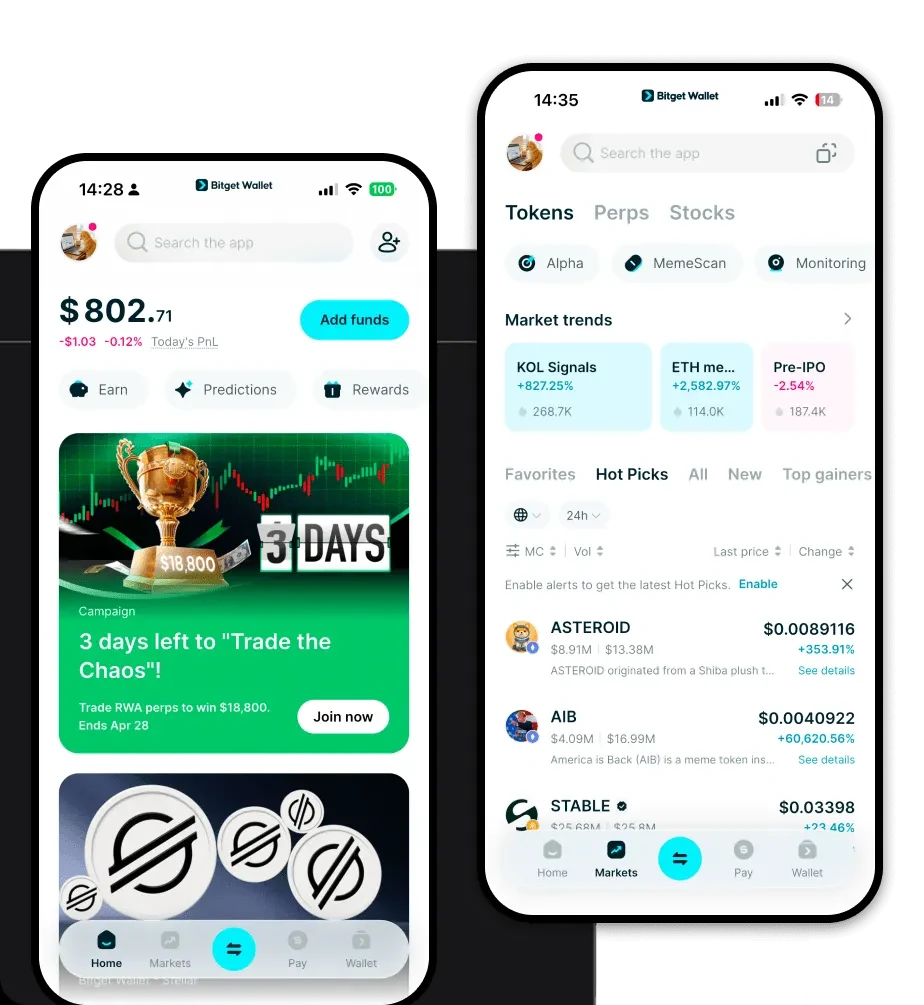
To engage with the PLTS ecosystem securely, you need a robust, non-custodial solution. We recommend users download Bitget Wallet to manage their assets. Bitget Wallet stands out by providing comprehensive multi-chain support, ensuring that your EVM-based tokens are always accessible. As a non-custodial wallet, it ensures you remain the sole owner of your private keys, maintaining full control over your assets at all times. Whether you prefer desktop interaction via browser extensions or mobile trading on iOS and Android devices, Bitget Wallet offers a unified, intuitive experience that simplifies complex on-chain interactions for both beginners and veterans.
Why Choose Bitget PLTS Wallet?
- Native EVM Compatibility: Bitget Wallet is architected for seamless interaction with the EVM ecosystem, ensuring that your PLTS transactions are processed efficiently with full smart contract support.
- Advanced Market Insights: Given that PLTS relies on signal-driven market structures, Bitget Wallet provides real-time data and market analysis tools to help you make informed decisions.
- Robust Security Framework: Backed by a $300 million user protection fund, Bitget Wallet offers enterprise-grade security to safeguard your assets against unauthorized access and common on-chain vulnerabilities.
- DEX Aggregation: Access hundreds of decentralized exchanges directly through your wallet, allowing you to find the best liquidity pools and swap paths for your PLTS tokens with minimal slippage.
- Community-Centric Features: The wallet is designed to facilitate easy access to decentralized governance, making it the perfect tool for participating in the lightweight governance framework envisioned by the PLTS community.
How to Create a PLTS Wallet
1. Download and Install: Visit the official website to download Bitget Wallet for your specific device (iOS, Android, or Browser Extension).
2. Initialize Your Wallet: Open the app and select 'Create Wallet'. You will be prompted to set a strong, unique password to protect your local access.
3. Back Up Your Seed Phrase: The wallet will generate a 12-24 word recovery phrase. Write this down on paper and store it in a secure, offline location. Never share this with anyone.
4. Configure EVM Settings: Since PLTS is an EVM token, ensure your wallet is set to the correct network. Bitget Wallet auto-detects most EVM chains, making this step effortless.
5. Import or Receive PLTS: Once set up, you can add PLTS by searching for its contract address or simply sending tokens from an exchange or another wallet to your new public address.
What Can You Do With a PLTS Wallet?
Using your Bitget Wallet, you can fully participate in the experimental nature of the PLTS token:
Speculative Trading: Leverage the wallet's built-in DEX aggregator to execute fast, low-slippage trades, taking advantage of the signal-driven market fluctuations inherent to PLTS.
Providing Liquidity: Deposit your PLTS tokens into decentralized liquidity pools to earn potential rewards, supporting the small-scale on-chain economy experiments.
Community Governance Voting: Use your wallet to connect to the project's governance portal, allowing you to cast votes and participate in the lightweight decision-making processes defined by the community.
On-Chain Strategy Testing: Utilize the wallet's dApp browser to test experimental DeFi strategies, allowing you to act as a researcher within the community-driven framework.
How PLTS Wallets Are Different from Other Crypto Wallets
Unlike wallets designed for UTXO-based chains like Bitcoin, where security focuses on managing unspent transaction outputs, a PLTS wallet on the EVM must handle the account-based model. This means your wallet manages an 'Account' balance and interacts directly with smart contract logic. Furthermore, while other chains might use complex resource models (like CPU/NET/RAM on EOS), the EVM model relies on a gas-based fee structure. Your Bitget Wallet is optimized for this, allowing you to customize gas settings to prioritize transaction speed during high-volatility periods or save on fees during quieter market phases, providing a distinct advantage for active PLTS traders.
