





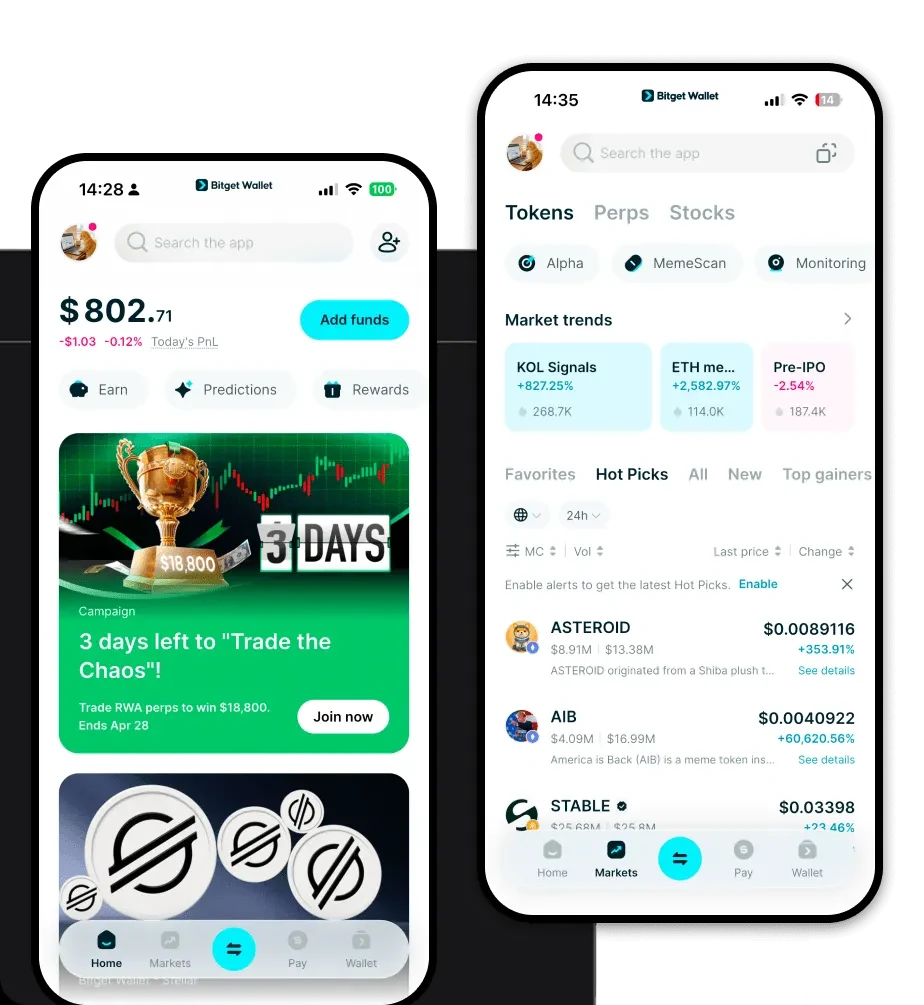
What is a FBS Wallet?
An FBS wallet is a specialized digital interface designed to interact with the FBS token, which operates primarily within the EVM (Ethereum Virtual Machine) ecosystem. Because FBS is built on EVM-compatible networks, it benefits from the robust infrastructure of decentralized finance. FBS is a cryptocurrency that can be securely stored and managed using the Bitget Wallet. As a digital asset, it allows users to explore Web3 ecosystems and participate in decentralized financial activities through supported wallet platforms.
Download Bitget FBS Wallet
To fully harness the potential of your FBS holdings, you need a robust interface that bridges the gap between your assets and the complex world of DeFi. The Bitget Wallet offers a comprehensive solution for users looking for a secure, non-custodial experience. Whether you prefer managing assets on the go with your mobile device or through a browser extension on your desktop, you can easily download Bitget Wallet to get started. It supports iOS, Android, and browser extensions, ensuring that your private keys remain under your sole control while providing seamless access to over 130 public chains and millions of tokens.
Why Choose Bitget FBS Wallet?
Choosing the right wallet is critical when dealing with DeFi assets like FBS. Bitget Wallet is engineered to optimize your experience within the EVM landscape:
- Seamless EVM Compatibility: Designed specifically for EVM chains, the wallet ensures that interacting with FBS smart contracts is intuitive, minimizing technical friction.
- High Liquidity Aggregation: By integrating hundreds of DEXs and liquidity sources, Bitget Wallet allows you to swap and trade FBS with minimal slippage.
- Advanced Cross-Platform Interoperability: Whether you are moving assets between chains or switching between mobile and desktop, your FBS portfolio remains synchronized and accessible.
- Deep Decentralized Ecosystem Integration: Gain direct access to DApps and DeFi protocols, enabling you to put your FBS to work without leaving your wallet interface.
- Institutional-Grade Security: With a $300 million user protection fund, your assets are shielded against unforeseen threats, offering peace of mind for long-term holders.
How to Create a FBS Wallet
Setting up your FBS wallet is a straightforward process that grants you full ownership of your digital assets:
- Download the App: Visit the official Bitget Wallet website and install the application on your preferred device (iOS, Android, or Browser Extension).
- Create a New Wallet: Open the app and select 'Create a New Wallet.' Make sure to back up your seed phrase immediately and store it in an offline, secure location.
- Verify Your Mnemonic Phrase: Follow the on-screen prompts to verify your seed phrase, ensuring you have recorded it correctly.
- Enable EVM Chains: Since FBS runs on EVM, ensure that Ethereum or the relevant EVM-compatible chain is enabled in your wallet's network settings.
- Receive FBS: Click on 'Receive,' select the correct network, and copy your FBS wallet address to transfer tokens into your new, secure wallet.
What Can You Do With a FBS Wallet?
Holding FBS in a non-custodial wallet unlocks a variety of DeFi utilities that go beyond simple storage:
- Trading on Decentralized Exchanges: Use the built-in swap feature to trade FBS against other assets directly on-chain without relying on centralized intermediaries.
- Holding for Long-Term Investment: Keep your FBS secure in a self-custody wallet, maintaining total control over your private keys for long-term asset preservation.
- Participating in Liquidity Pools: Provide your FBS to decentralized liquidity pools to earn trading fees and potential yield rewards, actively contributing to the ecosystem's health.
- Cross-Chain Asset Transfers: Utilize the wallet's integrated cross-chain bridge technology to move FBS across different supported networks, optimizing your portfolio for various DeFi opportunities.
How FBS Wallets Are Different from Other Crypto Wallets
FBS wallets, particularly those optimized for the EVM ecosystem like Bitget Wallet, differ significantly from those designed for other blockchain architectures. Unlike UTXO-based wallets (such as those for Bitcoin) which focus on transaction-based inputs and outputs, an FBS wallet operates on an account-based model. This structure is essential for executing the complex smart contracts required for DeFi. Furthermore, while some chains rely on resource-heavy models (like CPU/NET/RAM for EOS), EVM-based FBS wallets focus on gas fee optimization, allowing users to estimate and manage transaction costs efficiently. This distinction ensures that users can execute trades and participate in liquidity pools with greater transparency regarding network fees and execution speeds.
