





What is an RKT Wallet?
An RKT wallet is a digital interface designed to interact with the RKT token, which operates on the EVM (Ethereum Virtual Machine) blockchain. RKT (Rocket Pool's governance token) is a key component of the Rocket Pool ecosystem, a leading decentralized Ethereum staking protocol. It allows holders to participate in protocol governance and is crucial for node operators to earn rewards. Because RKT is an ERC-20 token, a compatible wallet must support the Ethereum network and its various Layer 2 scaling solutions, ensuring you can seamlessly interact with smart contracts that power the Rocket Pool protocol.
Download Bitget RKT Wallet
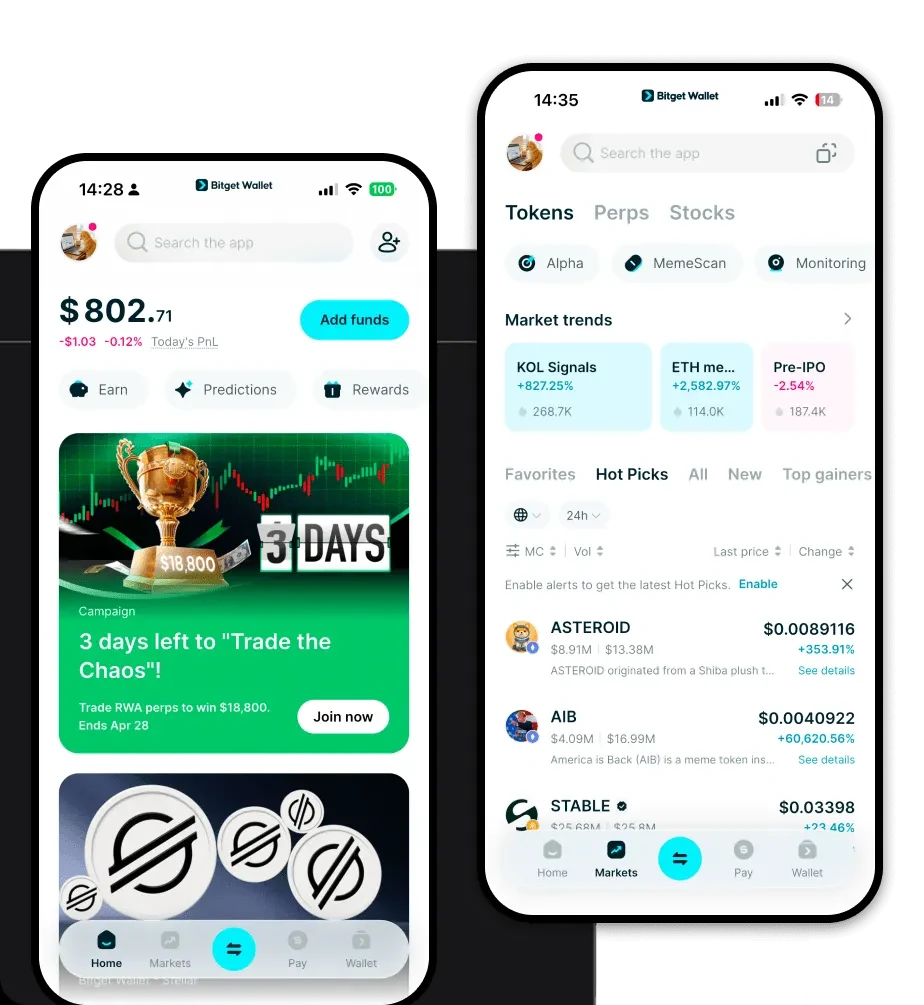
To begin your journey into decentralized finance, you need a tool that bridges the gap between complex blockchain protocols and user-friendly interfaces. We recommend you download Bitget Wallet to manage your RKT assets. This application provides a non-custodial environment, meaning you maintain total control over your private keys and seed phrases at all times. Whether you are using an iOS device, an Android smartphone, or a browser extension on your desktop, Bitget Wallet offers a unified experience across all platforms. With support for over 130 public chains, it ensures that your RKT tokens are always accessible, and you are never locked into a single ecosystem.
Why Choose Bitget RKT Wallet?
- EVM Ecosystem Integration: As an EVM-compatible wallet, it offers native support for the complex smart contracts used in DeFi protocols like Rocket Pool, ensuring smooth interactions with dApps.
- Advanced Gas Optimization: Bitget Wallet intelligently manages gas fee estimations, helping you execute transactions on the Ethereum network more cost-effectively during periods of high congestion.
- Security-First Architecture: With a $300 million user protection fund and robust encryption, your RKT tokens are shielded against common web3 threats.
- Permissionless DeFi Access: The built-in dApp browser allows you to connect directly to the Rocket Pool interface without third-party intermediaries, maintaining your anonymity and security.
How to Create an RKT Wallet
Creating your secure gateway for RKT is a straightforward process designed for both beginners and experienced users:
- Download and install the Bitget Wallet application from the official website or your device's app store.
- Open the app and select 'Create a New Wallet' to generate a unique set of recovery phrases.
- Carefully back up your 12-word seed phrase on paper—never store it digitally—as this is the only way to recover your funds.
- Once initialized, navigate to the asset management section and use the 'Add Token' feature to import RKT by pasting the correct contract address.
- Your wallet is now ready to receive, store, and manage your RKT tokens on the Ethereum network.
What Can You Do With an RKT Wallet?
Owning an RKT wallet opens the door to the full suite of Rocket Pool functionalities. Here is how you can utilize your tokens:
- Staking: You can participate in decentralized liquid staking by locking your assets to help secure the Ethereum network while earning yield.
- Governance Voting: By holding RKT in your wallet, you gain the right to participate in community-led governance, voting on proposals that shape the future of the Rocket Pool protocol.
- Node Operator Collateral: If you choose to run a validator, you can use your RKT as the required collateral to become a permissionless node operator.
- Liquidity Provision: You can utilize your wallet to provide liquidity on decentralized exchanges, earning fees from the trading volume generated by other users.
How RKT Wallets Are Different from Other Crypto Wallets
Unlike wallets designed for UTXO-based chains like Bitcoin, an RKT wallet is built specifically for the Ethereum account-based model. This means your wallet doesn't just manage unspent transaction outputs; it interacts directly with smart contract states. Because RKT is a DeFi-focused token, your wallet acts as a browser for the decentralized web. You are interacting with the EVM’s state machine, which requires the wallet to handle gas fees (the cost of computation) efficiently. While Bitcoin wallets focus on simple transfers, an RKT wallet is an active participant in the DeFi ecosystem, allowing for complex permissionless node operations and liquid staking interactions that are impossible on non-EVM chains.
