


World Cup Odds 2026: How Prediction Markets Compare with Traditional Betting Lines
World Cup Odds 2026 is the market price of a team’s chance to win, expressed in probability terms rather than as a simple “prediction.” For World Cup Odds 2026, the expanded 48-team format and bracket structure matter more than ever—because pricing is influenced not only by team strength, but also by route difficulty and volatility across a longer tournament.
In this guide, we will provide a comprehensive breakdown of World Cup Odds 2026 — from converting odds into implied probability, to understanding how prediction markets form prices through trading activity, and how to compare these signals without confusing “price” with “truth.” At the same time, we will also walk you through how to use Bitget Wallet to participate in the Web3 World Cup market in a simple and secure way.
Key Takeaways
- World Cup Odds 2026 converts cleanly into implied probability, but the number is still a priced signal—not a pure forecast.
- Prediction markets price outcomes through trading, where price behaves like probability under crowd consensus.
- Differences between sportsbooks and prediction markets show up most after news shocks (lineups, injuries, or draw-path shifts).
What is World Cup Odds 2026?
World Cup Odds 2026 is best understood as a priced probability signal: a quoted market price that can be converted into implied probability. It is not a neutral forecast, because sportsbooks embed risk management (margin + exposure control) rather than publishing “true probability.”
At a high level, World Cup Odds 2026 helps you answer: “How is the market pricing this outcome today?” That framing matters because the market you’re reading may be built on two different engines:
- Managed pricing (sportsbooks): A bookmaker sets and adjusts prices while managing a risk book.
- Traded pricing (prediction markets): Participants buy/sell exposure, and the market price updates via order flow.
This section builds the base mechanics—implied probability and margin—so later comparisons across World Cup Odds 2026 markets remain apples-to-apples.
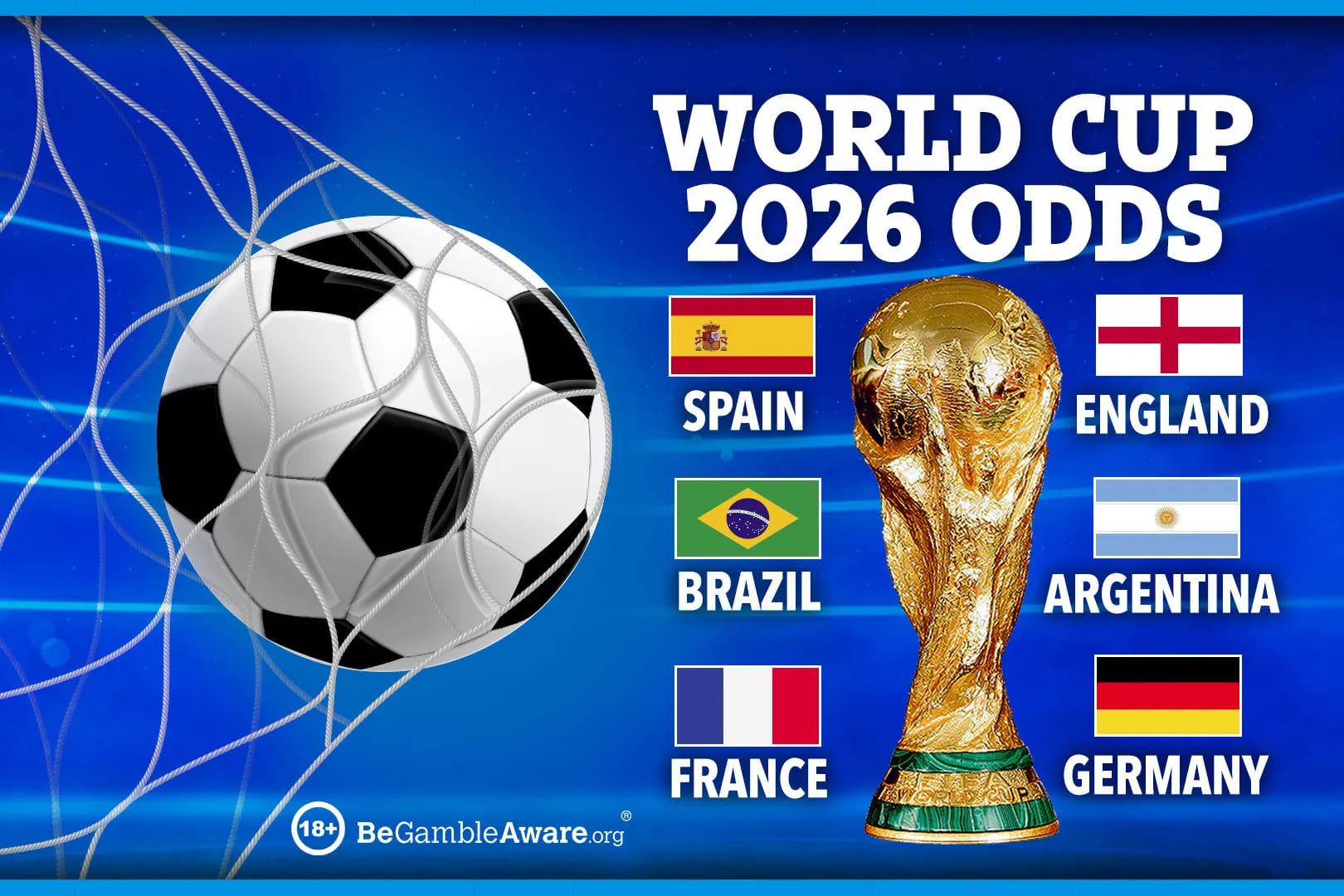
Source: thesun.co.uk
How Do You Convert World Cup Odds 2026 Into Implied Probability?
To compare pricing across markets, you first need to convert World Cup Odds 2026 into probability. This does not prove the “true odds” — it simply standardizes the quote into a common unit so it can be compared consistently.
There are two common conversion methods:
- American Odds Conversion (commonly used in U.S. markets):
- This format expresses odds as positive (+) or negative (-) numbers, indicating either the profit on a 100-unit stake or the amount required to stake in order to win 100 units.
- For positive odds (+X): Implied Probability = 100 / (X + 100)
- Example: +450 ⇒ 100 / (450 + 100) = 100 / 550 = 18.18%
- Note (negative odds): For -X, the standard formula is Implied Probability = X / (X + 100), calculated using the absolute value of X.
- Fractional Odds Conversion (commonly used in UK/EU markets):
- This format expresses potential profit relative to stake as a ratio A/B and is widely used in the UK and parts of Europe.
- For fractional odds A/B: Implied Probability = B / (A + B)
- Example: 9/2 ⇒ 2 / (9 + 2) = 2 / 11 = 18.18%
As we can clearly see, converting World Cup Odds 2026 into probability allows you to compare sportsbook quotes against one another, as well as compare sportsbook pricing with probability-style quotes from prediction markets.
However, conversion alone is not sufficient — because margin (vig/overround) is always embedded in sportsbook pricing, causing the total implied probabilities to exceed 100%.
Why Does Vig Create a Gap Between World Cup Odds 2026 and True Probability?
Sportsbooks don’t just “predict” — they price. And that pricing typically includes vig (also called overround), which is the built-in margin designed to keep the market profitable and help operators manage risk.
When you convert all outcomes in a market into implied probabilities, their total will often exceed 100%. The amount above 100% is the overround.
Example: Imagine a simplified market with three outcomes implying the following probabilities:
- Outcome A: 45%
- Outcome B: 35%
- Outcome C: 26%
- Total = 106%
The extra 6% is the overround (margin + risk buffer). This is why a sportsbook’s World Cup Odds 2026 should be interpreted as a margin-adjusted probability, not a neutral probability.
Why Does Vig Exist, Vig helps sportsbooks:
- Risk book management: Balance exposure across different outcomes
- Operational margin: Keep the market financially sustainable
- Liability control: Popular teams often attract one-sided money flow, requiring pricing adjustments to offset concentrated risk
What Inputs Drive Bookmaker World Cup Odds 2026 Models?
Even before margin, bookmakers typically start from a model-based view of team strength and tournament path. Common inputs include:
- Historical performance: Tournament track record across cycles
- Current form: Recent results and tactical stability
- Power ratings: Internal rating systems or public proxies
- Player availability: Injuries, suspensions, and lineup uncertainty
- Path and draw structure: Group difficulty and projected knockout route
- Liability balancing: Adjusting quotes to manage exposure
Sportsbook odds reflect risk-adjusted pricing rather than an unbiased probability forecast.
That’s the key reason cross-market comparisons can be informative: if one market is heavily shaped by margin and exposure control, while another is shaped by traded consensus, the resulting World Cup Probability signals may diverge—especially after new information hits.
How Do Bookmakers Price the 2026 World Cup Favorites?
Sportsbook World Cup Odds 2026 for favorites is produced by a blend of team-strength models and risk-book management. Even when the math converts cleanly into implied probability, the quote is still shaped by margin and exposure control—so it should be treated as a priced signal, not “true probability.” The cleanest way to read it is: what the market is willing to pay today for that outcome.
To keep this section practical, we use a consistent workflow:
- Take the odds quote (e.g., +450).
- Convert it to implied probability.
- Interpret the number as market pricing, not a forecast.
- Keep an overround reminder in the background: sums across teams exceed 100%.
This is especially useful in World Cup Odds 2026, where the 48-team format increases path dependency: a favorite can look “strong” while still only pricing at ~1-in-5 to win outright, because tournament variance is structural.
Source: bettinglounge.co.uk
1. Spain
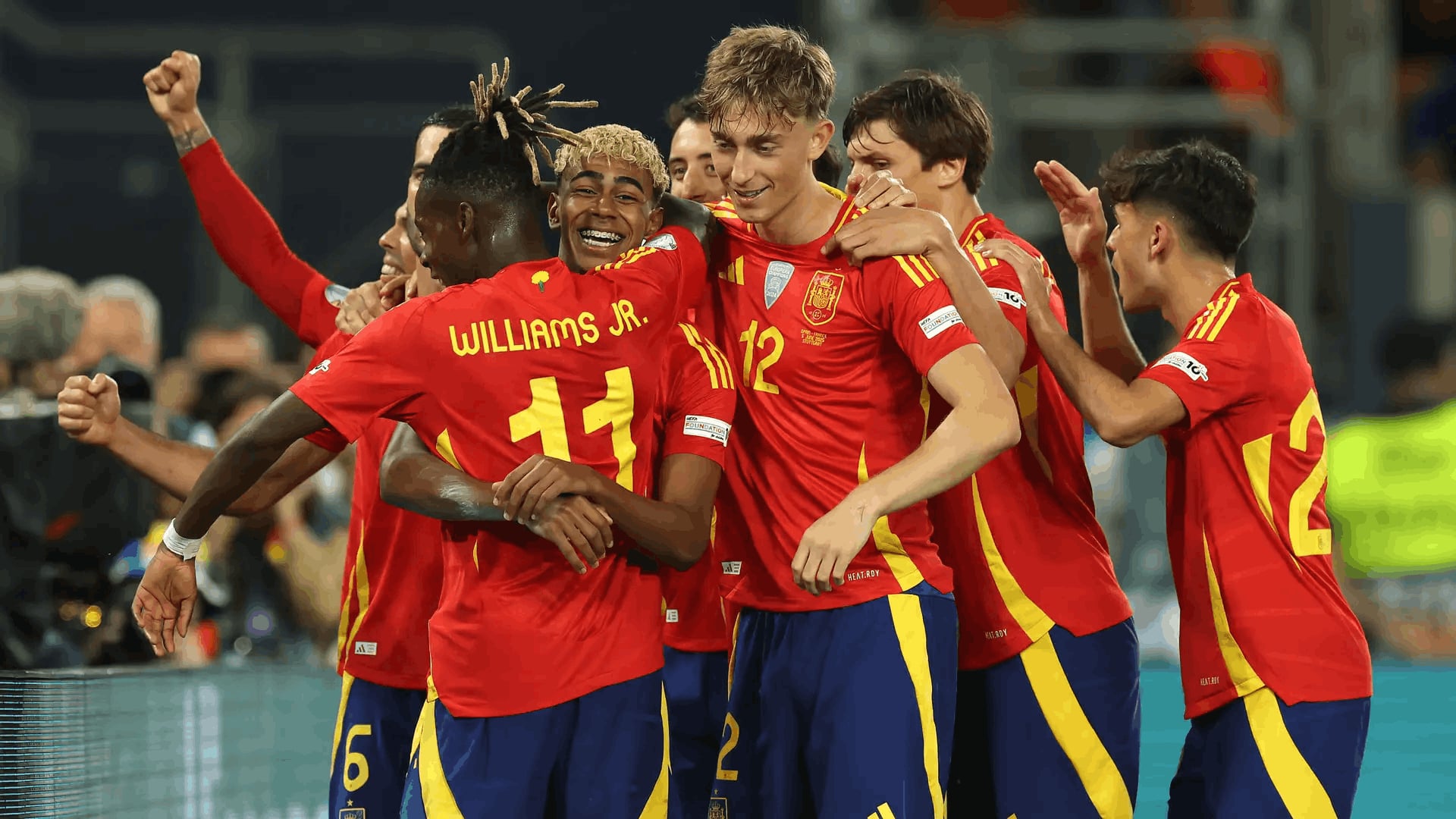
Source: goal.com
Source: goal.com
Spain are the reigning EURO 2024 champions and are widely viewed as one of the strongest contenders for the 2026 World Cup. Stars such as Nico Williams and Pedri, alongside a dynamic group of technically gifted young players, form a new generation that blends traditional ball control with modern transition speed. With tactical stability and squad depth, Spain are priced firmly among the tournament favorites.
Spain is widely listed at +450 in major World Cup Odds 2026 markets, often shown as roughly 9/2 in fractional format. Post-draw, they sit at the top of the favorites board.
- Implied Probability Calculation: For +450 ⇒ Implied Probability = 100 / (450 + 100) = 18.18%
An 18.18% implied probability does not mean Spain is expected to “dominate.” It means that, in the outright winner market, sportsbooks are pricing Spain as the most likely single outcome among many, while still acknowledging how volatile a World Cup is.
2. England
Source: goal.com
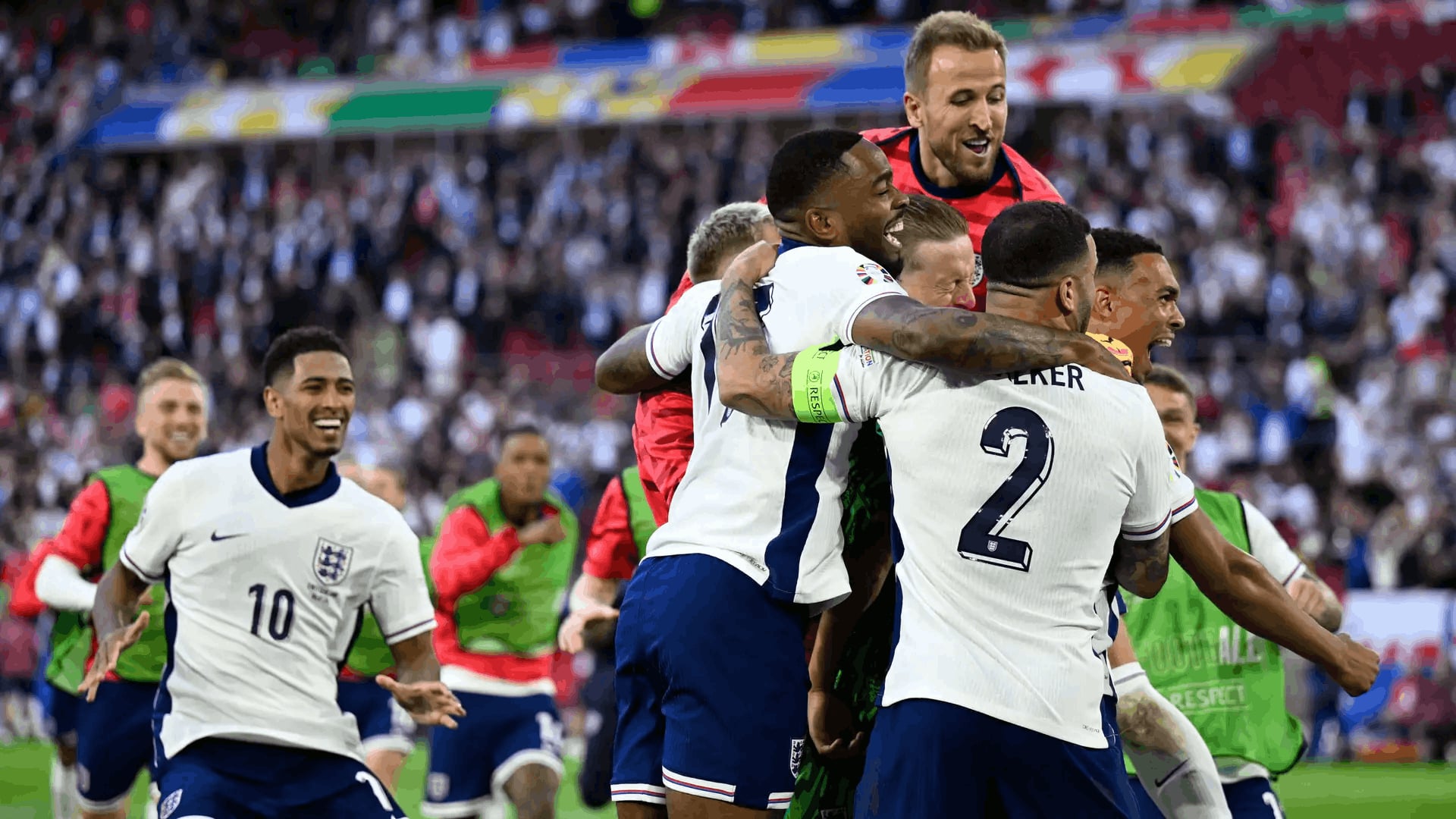
England enter the 2026 World Cup cycle with one of the most talent-rich squads in Europe, blending experience with elite young stars. Led by proven leaders like Harry Kane and supported by dynamic talents such as Jude Bellingham and Bukayo Saka, England combine physical presence with technical quality. Their recent tournament consistency keeps them firmly positioned among the top-tier contenders.
England is typically priced around +550 in American format, with fractional equivalents commonly in the 11/2 to 6/1 range across books. They are consistently positioned just behind Spain.
- Implied Probability Calculation: For +550 ⇒ Implied Probability = 100 / (550 + 100) = 15.38%
Spain at 18.18% versus England at 15.38% reflects a gap of roughly 2.8 percentage points — narrow enough to signal a tightly packed top tier rather than a dominant runaway favorite. The market is effectively clustering both teams within an elite band where even minor updates — a fitness concern, a squad adjustment, or a subtle shift in bracket path — can materially reprice expectations.
And while 15.38% appears to represent a clear probability, it still sits inside a broader market structure where implied probabilities across all teams typically exceed 100%, reminding us that these figures reflect risk-adjusted pricing, not pure mathematical truth.
3. France

Source: goal.com
France remain one of the most structurally complete squads in international football, combining elite athleticism with tournament experience. With world-class talent such as Kylian Mbappé, Antoine Griezmann, and a deep supporting cast across Europe’s top leagues, France consistently profile as a high-ceiling contender. Their blend of pace, physical dominance, and knockout pedigree keeps them firmly embedded in the top tier of World Cup favorites.
France is commonly listed at +750 in American odds, often around 8/1 in fractional format. They remain in the top tier of 2026 World Cup Odds Favorites, but priced wider than Spain and England.
- Implied Probability Calculation: For +750 ⇒ Implied Probability = 100 / (750 + 100) = 11.76%
The probability step-down from England (15.38%) to France (11.76%) is meaningful. It reflects how markets often form tiers:
- Tier 1: shortest-priced favorites (Spain, England)
- Tier 2: elite challengers with a wider price due to higher uncertainty (France and others)
This is not a claim that France is “worse” in absolute footballing terms. It’s a reflection of pricing distribution under uncertainty and exposure management.
As odds get longer, small moves in price can create relatively large shifts in implied probability. This is why comparing signals across markets (sportsbooks vs prediction markets) can be interesting: the sensitivity and reaction function differ.
4. Quick sum to set up overround detection
Even just these three implied probabilities add up to:
18.18% + 15.38% + 11.76% = 45.32%
That’s before you include Brazil, Argentina, Germany, Netherlands, and a long list of other contenders. This is the practical intuition behind why an outright winner market is not “clean probability” once you consider the full board.
5. How Can You Detect Overround in Outright Winner Markets?
You don’t need complex tooling to detect margin. Use a basic workflow:
- Select a set of teams (for example: top 10 in the outright board).
- Convert each team’s World Cup Odd into implied probability using the same formula.
- Sum the implied probabilities.
- If the sum is meaningfully above 100%, that is the overround in action.
This matters because it prevents the most common reader mistake: treating converted implied probability as the “real chance.”
How Do Prediction Markets Price the World Cup?
In Prediction Markets World Cup contracts, outcomes are priced through trading, so price behaves like implied probability derived from crowd consensus. Instead of a bookmaker managing a risk book, participants collectively set the price through order flow—meaning the market can update continuously as information changes.

Source: bettingodds.com
What Does a Yes–No Price Mean in Prediction Markets World Cup Contracts?
A Yes–No contract in Prediction Markets World Cup markets is a straightforward probability instrument. When you buy “Yes,” you are taking exposure to a specific outcome resolving as true—for example, a team winning its group. The quoted price, usually displayed as a percentage, functions as a crowd-implied probability. In other words, if the market shows “Yes 83%,” it means participants collectively price that outcome as having roughly an 83% chance of occurring, based on current trading activity.
For example:
- Spain to win Group H: 83% (Yes 83%) indicates that traders believe Spain is highly likely to top that group. Similarly
- Portugal to win Group K: 66% (Yes 66%) suggests the market views Portugal as the group favorite, though with more uncertainty than Spain’s case.
| Group Winner | Spain (Group H) | 83% | Crowd prices Spain as likely group winner |
| Group Winner | Portugal (Group K) | 66% | Crowd prices Portugal as group leader |
The key principle is that price equals consensus probability at that moment. As more participants enter and trade based on new information, that probability estimate can change.
Read more: What Is a Yes No Market: How Investors Trade Probabilities Using Yes-or-No Contracts
Why Can Prediction Markets Reprice Faster Than Sportsbooks After New Information?
Prediction markets adjust faster because pricing is driven by continuous trading rather than centralized line management.
- Order flow moves price instantly: When traders buy or sell aggressively, the probability price updates immediately—no manual adjustment required.
- Continuous repricing: Unlike sportsbooks that update in steps, traded markets refresh probability in real time through ongoing transactions.
- Information catalysts: Lineup confirmations, injury news, bracket-path shifts, and performance signals can trigger rapid probability changes in a World Cup Odds 2026 environment.
In a World Cup Odds 2026 context, this structural difference can create noticeable divergences. Sportsbooks may move in controlled increments to manage liability, while prediction markets may gap quickly if participants react decisively to new information.
World Cup Odd 2026 vs Prediction Markets — Which Reflects True Probability?
Both World Cup Odd 2026 and prediction market prices are probability signals, but they are produced by different mechanisms: sportsbooks publish managed prices with embedded margin, while prediction markets discover prices through trading. This section compares which signal tends to incorporate information faster and with less structural distortion—without claiming either is always “more accurate.”
| Dimension | Sportsbook | Prediction Market |
| Pricing Source | Bookmaker model + liability management | Market participants + order flow |
| Embedded Cost | Vig/overround built into prices | Typically spread (and/or execution costs) |
| Reaction Speed | Adjusted in steps | Continuous repricing through trading |
| Long-Run Efficiency | Risk-adjusted pricing under constraints | Competitive consensus under participation |
1. Information Reaction Speed
In practice, the key question is not who predicts better, but who reprices faster when new information changes expectations.
- Sportsbook World Cup Odd 2026: Model-driven and liability-managed; odds are updated after confirmed information (lineups, injuries, opponents) and may move in controlled steps to reduce exposure risk and avoid sudden one-sided flow.
- Prediction markets: Trade-driven and continuous; price adjusts instantly as buyers and sellers react, creating a live World Cup Probability curve rather than a periodically revised quote.
In fast-moving windows—especially after injury news or lineup confirmation—World Cup Odd 2026 signals and traded probability prices can diverge. Sportsbooks may adjust conservatively, while prediction markets may move aggressively. The difference lies in mechanism, not correctness.
2. Embedded Cost Structure (Vig vs Spread)
This is the clearest structural distinction between the two systems.
- Sportsbook World Cup Odd 2026: Includes vig/overround; when you convert all teams’ odds into implied probabilities, the total typically exceeds 100%, reflecting margin and risk buffering rather than pure probability.
- Prediction markets: Prices are shown directly as percentage-style probabilities; instead of built-in overround, cost may appear through bid–ask spread or other execution frictions depending on liquidity.
If implied probabilities sum to 106%, the extra 6% represents margin. That’s why a sportsbook’s converted number is best read as a risk-adjusted price, not a neutral forecast.
3. Liquidity Structure and Price Stability
A probability signal is only as stable as the liquidity supporting it.
- Sportsbook World Cup Odd: Centralized liquidity; sportsbooks accept bets at posted prices and manage exposure internally, which can smooth price movements and reduce extreme volatility.
- Prediction markets: Participant-driven liquidity; price stability depends on active traders. Deep liquidity produces tighter pricing, while thin liquidity can cause sharper swings during news shocks.
When analyzing Prediction Markets World Cup prices, always assess activity and depth. Low-volume markets may overreact to limited trades—not because the signal is wrong, but because liquidity is thinner.
4. Long-Run Probability Efficiency
Over longer timeframes, both systems aim for efficient pricing but through different engines.
- Sportsbook World Cup Odd: Designed to price efficiently while managing risk and margin; operators may shade odds to balance exposure, introducing structural adjustments beyond raw probability.
- Prediction markets: Designed for competitive price discovery; under strong participation and liquidity, collective trading can push probabilities toward consensus faster.
A balanced framing is competitive probability markets may converge toward consensus more quickly when participation is active. This does not imply predictive certainty—only that the pricing mechanism differs.
Spain Case Study: World Cup Odds 2026 vs Group Winner Probability?
Spain is a clean case study because it shows how contract definition changes pricing. Outright winner odds and group-winner probabilities are related but not interchangeable. The goal is not to force a 1:1 comparison, but to demonstrate how different milestones produce different probability levels.
What Does Spain +450 Imply Compared With Spain’s Group Winner Price?
The critical alignment step is recognizing that these are different instruments: the sportsbook quote reflects an outright winner market, while the prediction market example reflects a group winner contract.
-
Sportsbook outright winner: Spain +450
Converted into implied probability, +450 equals 18.18%. This means Spain is priced as the leading World Cup Odds 2026 favorite, but still only wins roughly 1 out of 5 simulated tournaments in implied terms—highlighting the high variance of a 48-team format.
-
Prediction market group winner: Spain 83%
An 83% Yes price indicates the market strongly expects Spain to finish first in its group. However, topping a group is a narrower objective than winning the entire tournament, so a substantially higher probability is rational.
The difference is rational because winning a group requires outperforming a limited set of opponents over a few matches, whereas winning the tournament requires surviving multiple knockout rounds against elite teams under cumulative variance.
What Is the Best Visualization for Cross-Market Pricing Divergence?
The most effective visualization separates market type and contract definition before comparing probability levels. Cross-market pricing only becomes analytically meaningful when the instrument being priced is clearly identified.
| Market | Contract Type | Price | Implied Probability | Notes |
| Sportsbook | Outright Winner | Spain +450 | 18.18% | Includes margin; reflects full tournament title probability |
| Prediction Market | Group Winner | Spain 83% | 83% | Different milestone; not directly comparable 1:1 |
This format prevents structural distortion. An outright winner contract measures Spain’s probability of surviving the entire tournament, while a group winner contract measures performance over a limited stage. Without aligning contract definitions, probability gaps can appear misleading rather than informative.
Properly structured tables ensure that World Cup Odd vs Prediction Markets comparisons focus on instrument equivalence first, and numerical divergence second.
How to Track World Cup Odds 2026 Updates Without Getting Misled?
Institutional observers increasingly treat prediction markets as real-time sentiment tools: they provide a live read on how probability consensus shifts around news.
How Do Investors Use Prediction Markets as Real-Time Sentiment Indicators?
The most defensible “institutional” framing is not “they use it to gamble,” but “they use it to monitor expectations.”
Common use-cases, described conceptually:
- Live expectation curve: prices move like a continuous probability series that can be tracked over time.
- Event-risk dashboard: probability sensitivity to injuries, lineup news, or bracket-path updates becomes observable.
- Narrative stress-testing: if public commentary says “Team X is surging” but market probability doesn’t move, that gap is informative.
- Timing and positioning: traders can adjust exposure as the market reprices, instead of being locked into a static view.
This is why prediction markets are often described as a sentiment engine: not because they are perfect, but because they quantify crowd belief in a tradable form.
Why Are Event Contracts Being Treated Like an Emerging Asset Class?
Event contracts are increasingly discussed as an emerging asset class because they transform expectations about real-world outcomes into tradable probability instruments. Rather than representing cash flows like equities or fixed income, they represent priced beliefs about whether a defined event will occur.
Several structural features explain this shift:
- Political-market precedent: event markets have been used for forecasting contexts beyond sports, demonstrating that tradable expectations can be informative.
- Event-driven volatility: outcomes respond to discrete catalysts, creating measurable repricing opportunities.
- Short-term inefficiencies may exist: especially when markets react at different speeds.
How Can You Use Bitget Wallet to Participate Safely in World Cup Prediction Markets?
Bitget Wallet does not directly host World Cup prediction markets, but it serves as a secure gateway to on-chain prediction dApps through its integrated Web3 browser. As a non-custodial, cross-chain wallet, it allows users to connect safely, manage stablecoins, and access decentralized markets while retaining full asset control.
Why Bitget Wallet Is a Strong Gateway to On-Chain Prediction Markets
-
Non-custodial security + MPC smart wallet technology
Full asset ownership with advanced encryption, no single point of failure, and institutional-grade protection including a $700M Protection Fund
-
Cross-chain access across 130+ blockchains
Seamlessly connect to major ecosystems like Ethereum, Solana, BNB, Base, Polygon, and more — enabling flexible participation in multi-chain prediction market dApps.
-
Built-in DEX aggregator with optimized routing
Swap stablecoins and tokens instantly with automatic best-price selection and smart gas optimization.
-
Stablecoin management + Earn integration
Securely store USDT, USDC, and other stable assets while accessing yield tools such as Stablecoin Earn Plus (up to 10% APY)
-
Integrated Web3 browser (20,000+ dApps supported)
Discover and connect directly to decentralized prediction platforms without switching applications.
-
Beginner-friendly interface + AI-powered discovery tools
Real-time trending insights, simplified onboarding, and intuitive execution for new Web3 participants.
Manage stablecoins securely and explore cross-chain Web3 markets in one beginner-ready app — download Bitget Wallet to store assets, swap across chains, and connect safely to on-chain prediction platforms.
Own your Web3 journey with secure stablecoin storage, trending token access, and seamless cross-chain trading — all in Bitget Wallet.
Related Reading on World Cup Prediction Markets Trading
If you're exploring World Cup prediction markets — from understanding how yes-no contracts work to evaluating legality and risk management — these guides will help you trade event-based probabilities more strategically.
🔹 Understanding Prediction Market Basics
- What Is a Prediction Market in Crypto and How Blockchain-Based Prediction Markets Work
- What Is a Yes No Market: How Investors Trade Probabilities Using Yes-or-No Contracts
🔹 World Cup Prediction Market Strategy
- World Cup Prediction Market: Complete Guide to Trading the 2026 World Cup
- World Cup Predictions 2026: Who Will Win Based on Power Rankings and Market Trends
- World Cup Odds 2026: How Prediction Markets Compare with Traditional Betting Lines
- World Cup Dark Horses 2026: Underrated Teams That Could Shock the Tournament
- United States in the World Cup Prediction Market: Can the Golden Generation Outperform the Odds?
🔹 Legal & Risk Considerations
- Is Prediction Market Legal: US Federal vs State Laws Explained
- What You Need to Know About Prediction Market Before You Bet
Conclusion
World Cup Odd in 2026 are no longer just sportsbook numbers — they are signals competing with decentralized probability markets. When you convert odds into implied probability and account for vig/overround, you see sportsbook pricing as a managed quote; when you observe traded prices in prediction markets, you see a crowd-driven probability signal shaped by liquidity and order flow.
For investors and analytical readers, the edge is not “picking winners,” but reading how probability is priced across systems—especially after information shocks. If you decide to explore on-chain event markets, Bitget Wallet can serve as the practical self-custody tool to manage assets, verify transactions, and access third-party dApps through its integrated browser.
Download Bitget Wallet now to access real-time World Cup prediction markets and trade probabilities as the tournament unfolds!
FAQs
1. What Does World Cup Odds 2026?
World Cup Odds 2026 is a priced probability quote. You can convert it into implied probability, but it often includes vig/overround, so it’s not a neutral forecast. Many guides on How to Read World Cup Odds 2026 start with conversion math, then add the margin caveat.
2. Are World Cup Odds 2026 the Same as True Probability?
Not exactly. World Cup Odds 2026 reflect risk-adjusted pricing plus margin and liability management. When you convert all outcomes to implied probabilities, the total often exceeds 100%—a sign of overround.
3. How Do Prediction Markets World Cup Prices Work?
In Prediction Markets World Cup contracts, price behaves like crowd-implied probability because traders buy and sell exposure. Liquidity matters: deeper markets tend to produce more stable prices than thin markets.
4. Can You Compare World Cup Odd 2026 vs Prediction Markets for Value Signals?
Yes—carefully. World Cup Odd 2026 vs Prediction Markets comparisons can highlight relative mispricing, but they are signals, not guarantees. Only compare like-with-like instruments (outright vs outright, group vs group).
5. What’s the Safest Way to Participate On-Chain?
Bitget Wallet acts as your secure self-custody gateway into on-chain event markets, giving you direct access to third-party dApps through an integrated Web3 browser—while you remain fully in control of your assets at every step.
Risk Disclosure
Please be aware that cryptocurrency trading involves high market risk. Bitget Wallet is not responsible for any trading losses incurred. Always perform your own research and trade responsibly.

 Top Arc Tokens and Memecoins: What’s Trending on Arc Mainnet2026-09-16 | 5 mins
 Circle Arc Mainnet Launch: What Is Arc and Why Does It Matter?2026-09-14 | 5 mins
 Top Robinhood Chain Memecoins 20262026-09-09 | 5 mins



