United States in the World Cup Prediction Market: Can the Golden Generation Outperform the Odds?

United States in the World Cup Prediction Market is ultimately a pricing question. The market constantly translates the U.S. team’s chances of advancing into a measurable number—one that reflects how confident traders and bookmakers actually are. Instead of debating whether the team “looks strong” or “feels overrated,” converting market signals into implied probability allows you to see exactly what that confidence costs in percentage terms.
To read that number correctly, you first need to understand where it comes from. Prediction markets and traditional sportsbooks both publish odds, but they arrive at those figures through different structures. Prediction markets are crowd-priced through continuous trading, while sportsbooks set odds centrally to manage risk and margin. The analytical edge lies in comparing those two lenses—especially when injuries, lineup shifts, or group-stage dynamics cause prices to move. For readers who want to engage with on-chain prediction platforms directly, Bitget Wallet can function as a secure gateway, allowing seamless connection while maintaining full self-custody of assets.
In this article, we’ll break down how prediction markets function, examine where the market is currently pricing the U.S. team, convert odds into implied probabilities, and ultimately construct a realistic probability path toward reaching the quarterfinals—helping you build a smarter, more strategic investment approach.
Key Takeaways
- United States in the World Cup Prediction Market is a pricing signal, not a storyline. By converting contract prices and sportsbook odds into implied probability, you can compare crowd sentiment with bookmaker risk management.
- The real edge is path-based. Group D pricing influences Round of 16 probability, which matters more for quarterfinal outcomes than long-shot title narratives in a 48-team format.
- Risk must be priced in. Health volatility, defensive depth, and the need to beat multiple elite non-CONCACAF opponents can quickly compress upside as the tournament progresses.
What Is a World Cup Prediction Market?
A World Cup prediction market is a tradable market where outcomes (like “USA wins Group D” or “USA wins the World Cup”) are expressed as contracts that settle based on the final result. The key difference is that the price itself functions like a probability—making it easier to quantify what the market believes right now.
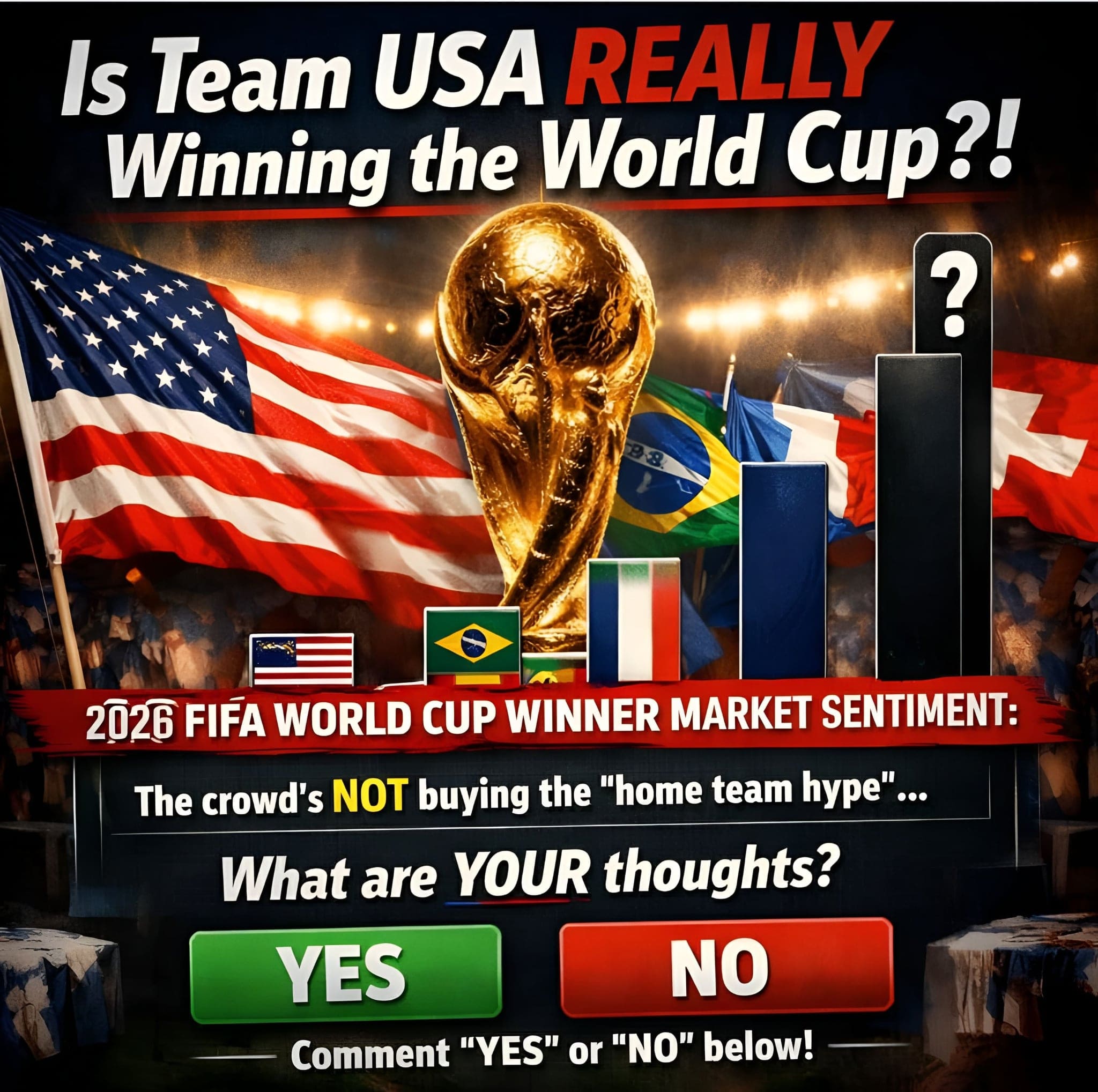
Source: Predictionsmarket on instagram
How Do Yes/No Contracts Work in a Prediction Market?
Most contracts look like Yes/No outcomes:
- If Yes happens, the contract settles at $1.
- If Yes does not happen, it settles at $0.
- The trading price typically sits between $0 and $1.
That’s why a contract trading at $0.19 is often read as ~19% implied probability. In practice, liquidity matters: higher volume and deeper order books tend to reduce slippage and make prices more stable, while thin liquidity can create noisy prices that overreact to headlines.
Read more: How to Trade on Yes-No Market
Why Is Crowd-Based Pricing Different From Bookmaker Pricing?
Sportsbooks set odds centrally; prediction markets are crowd-priced:
- Traders set the price by buying/selling contracts.
- New information (injuries, lineup changes, bracket implications) can be absorbed quickly because trading is continuous.
- Liquidity and efficiency improve as participation grows, but thin markets can be more volatile and easier to distort.
A simple way to visualize it is a straight probability scale: $0 → 0% and $1 → 100%. That mapping is what makes prediction markets so useful for probability-driven analysis.
What Is the United States Currently Priced At in the World Cup Prediction Market?
This is where the analysis becomes concrete: you’re not debating whether the team is “good,” you’re measuring what the market says their chances are, and whether that price makes sense relative to the path and the risks.

Source: Mirror
What Does the Market Imply for USA Title Probability Right Now?
Prediction market prices change frequently. If you’re looking at a “USA to win the World Cup” contract, the number you want is the live contract price, which can be read as implied probability.
- If the contract trades around $0.02, the market is implying ~2% title probability.
- If it trades around $0.05, the implied probability is ~5%.
This is also where market concentration shows up. Title markets often concentrate heavily in a small set of favorites; the U.S. price tends to sit far below the top tier, even when the path looks favorable.
What Do Sportsbook Odds Say About the USMNT in 2026?
Sportsbook odds give clean anchors you can convert into implied probability:
- USA 60–1 to win the World Cup → implied probability ≈ 1.6%
- USA +125 to win Group D → implied probability ≈ 44.4%
- USA +110 vs Paraguay (opener) → implied probability ≈ 47.6%
Sportsbook odds are not pure probability; they include margin (vig/overround) and are shaped by risk management. But they’re still extremely useful baselines.
Market vs Sportsbook Anchor
| Market / Sportsbook | Price / Odds | Implied Probability | Notes |
| Prediction market (USA title) | Live price (e.g., $0.02) | ~2% | Crowd-priced; liquidity-sensitive; can move fast on news |
| Sportsbook (USA title) | 60–1 | ~1.6% | Includes margin; reflects demand and book exposure |
| Sportsbook (USA win Group D) | +125 | ~44.4% | Path-focused pricing; reflects group strength perception |
| Sportsbook (USA vs Paraguay) | +110 | ~47.6% | Single-match view; highly sensitive to lineup/health |
How to Convert USMNT World Cup Odds Into Implied Probability?
If you can convert odds into implied probability, you can compare everything on the same scale and stop arguing in vague terms.
Whether you’re looking at USMNT World Cup odds or European favorites, probability conversion removes formatting noise and exposes the real percentage the market is implying.

Source: casinobeats.com
How to Convert American Odds Into Probability?
Use these standard conversions:
For positive American odds (+X):
P = 100/(X + 100)
Example: +125
P = 100/(125 + 100) = 100/225=~0.444 = 44.4%
For fractional-style “60–1” odds:
Treat it like +6000 for a quick approximation:
P =~100/(6000 + 100) = ~100/6100 = ~1.64%
These conversions let you benchmark USMNT implied probability across markets and compare it to other teams without getting trapped in odds formatting.
Why Don’t Sportsbook Odds Equal True Probability?
Sportsbooks are not forecasting engines. Odds are shaped by:
- Vig / overround: the book builds in margin, meaning summed implied probabilities across teams exceed 100%.
- Risk balancing: odds shift to manage exposure when public money piles in.
- Market segmentation: limits, liquidity, and bettor profiles affect pricing behavior.
So, if you add implied probabilities for top contenders from a sportsbook board, the total typically exceeds 100%. That “extra” is margin, and it’s one reason sportsbook odds should be read as risk-adjusted pricing, not pure truth.
Sportsbooks vs Prediction Markets: What’s the Difference at the World Cup?
Sportsbooks vs. Prediction Markets are not interchangeable because they produce prices in different ways. Sportsbooks set odds with margin and risk control in mind, while prediction markets let traders move prices based on new information. If you want credibility, compare the structure behind the price—not just the percentage shown.
| Dimension | Sportsbook | Prediction Market |
| Pricing model | Bookmaker sets odds | Traders set price |
| Margin (vig) | Included | Minimal / market-driven |
| Speed of reaction | Slower | Faster |
| Public sentiment | Partial | Direct |
When Might Sportsbook Odds Be More Reliable?
Prediction markets can be noisy when liquidity is thin. Sportsbooks can be more stable in a few scenarios:
- Early markets where prediction market liquidity is low.
- Manipulation risk in small contract markets where a few trades can move price.
- Operational stability where books enforce limits and dampen extreme swings.
Best practice is triangulation: use sportsbook odds as a baseline and prediction markets as the faster, sentiment-revealing layer.
Is the Golden Generation Properly Priced in the United States in the World Cup Prediction Market?
The United States in the World Cup Prediction Market is typically priced as a low-probability title contender, and that is broadly consistent with how elite favorites are valued. However, the U.S. profile is not purely a “longshot story.” The more interesting debate is whether the market is too conservative on progression—especially the quarterfinal benchmark—because path and home structure matter.

Source: espn.com
How Does the USMNT World Cup Lineup Influence Match Outcomes?
You don’t need a full roster breakdown to model pricing. You need to understand how structure changes the value of key players:
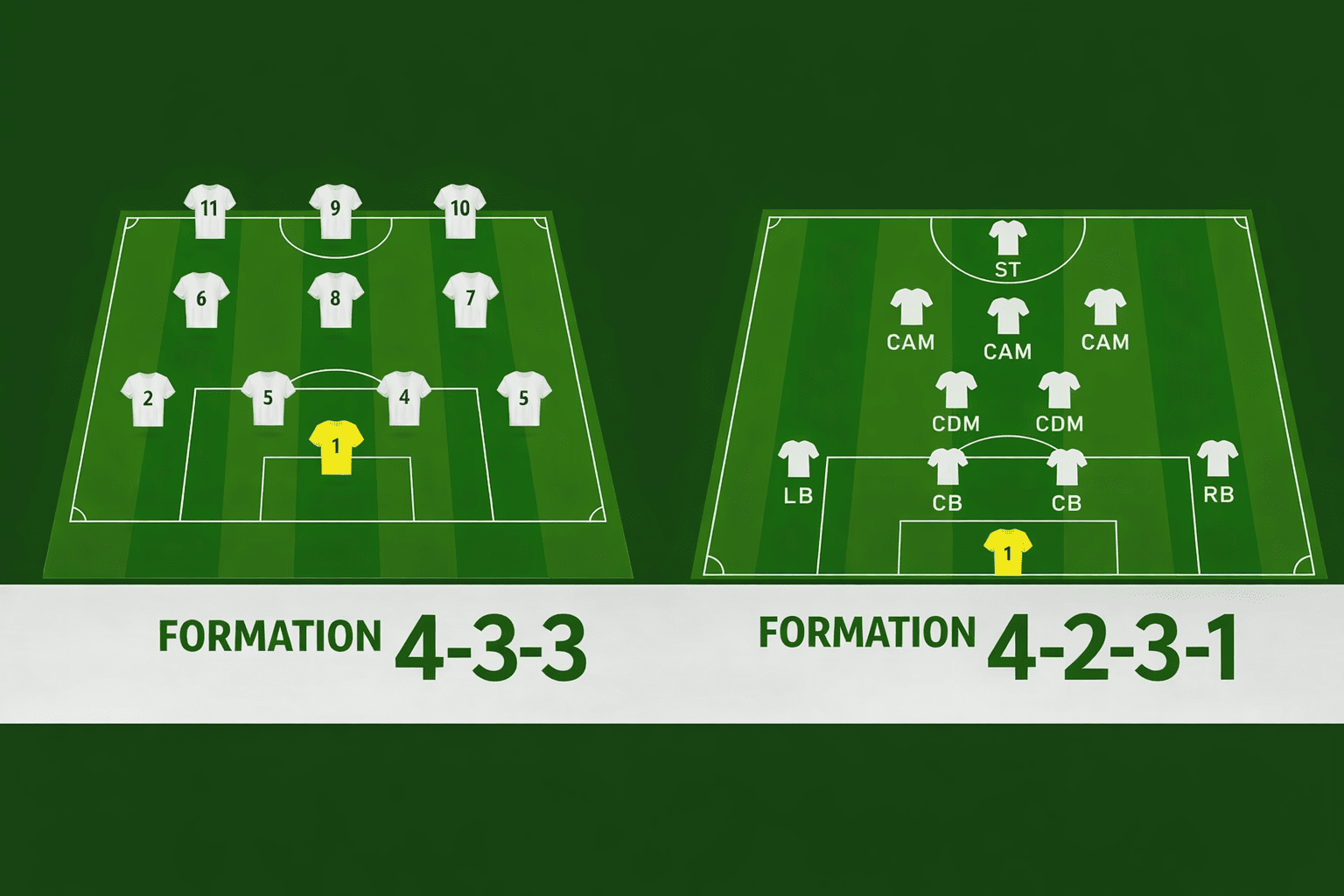
Two plausible base shapes:
-
Back four shape (4–3–3 / 4–2–3–1): stable roles, clearer defensive assignments.
-
Back three shape (3–4–3 / 3–5–2): wingbacks become high-impact; extra cover for older center backs; transitions can become sharper.
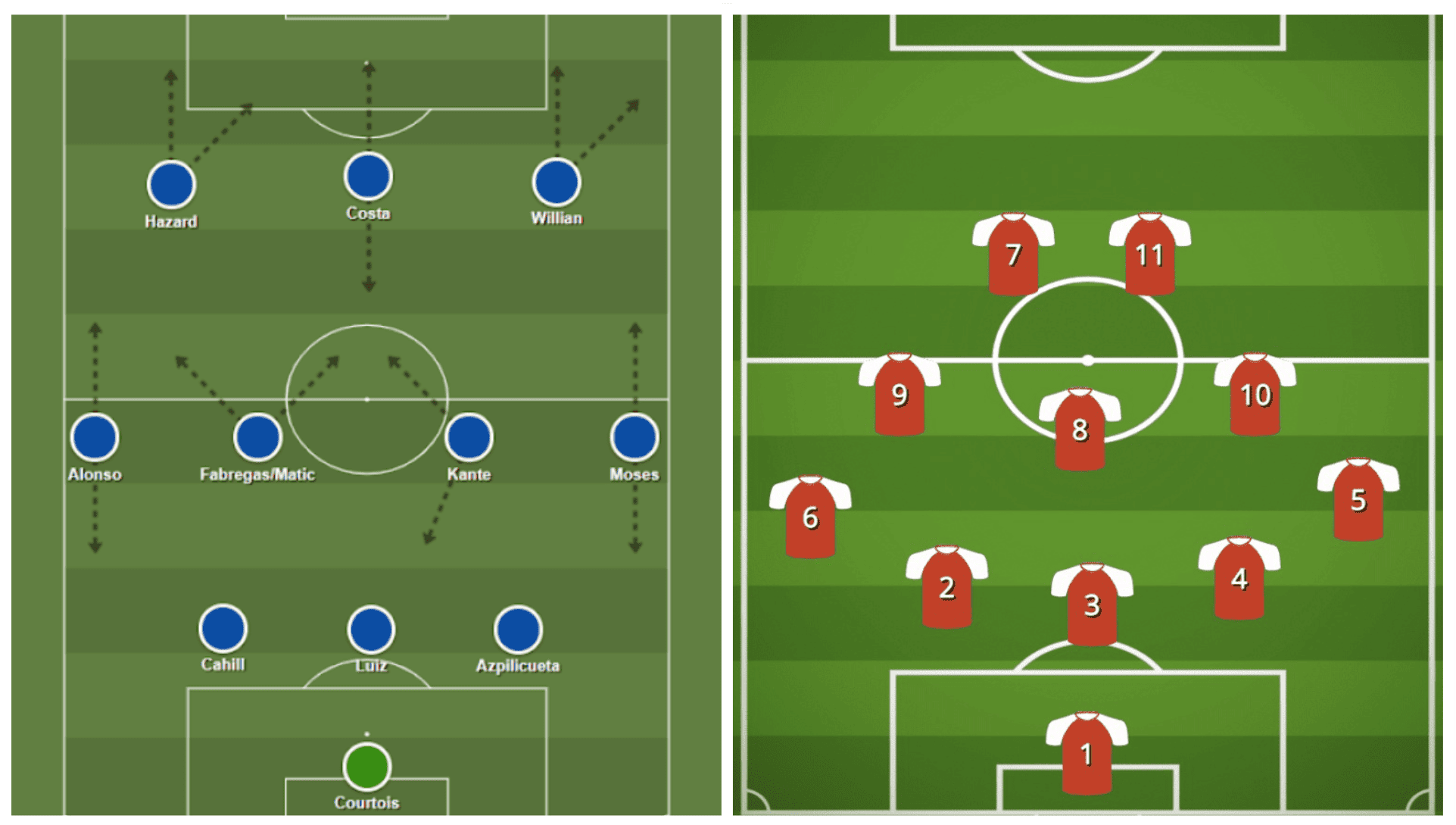
As is easy to see, a flexible tactical setup reduces matchup fragility in the group stage and limits downside risk against different opponent profiles. When key players are used in roles that maximize their strengths, performance becomes steadier and outcome variance tightens in high-leverage matches.
Key impact channels:
- A primary creator who can drift inside increases chance quality when chasing a goal.
- A box-to-box engine raises tempo and second-ball control.
- A true ball-winner’s fitness can determine whether the team can protect a lead.
- A lone striker’s finishing variance can swing single-elimination outcomes.
This is where USMNT implied probability becomes a question of whether the market is pricing in lineup flexibility and peak-age upside—or assuming the U.S. is structurally capped.
Are United States World Cup Group D Odds Reflecting a True Path Advantage?
Group pricing often matters more than title pricing early in a tournament model because it determines the Round of 16 tier you’re likely to face.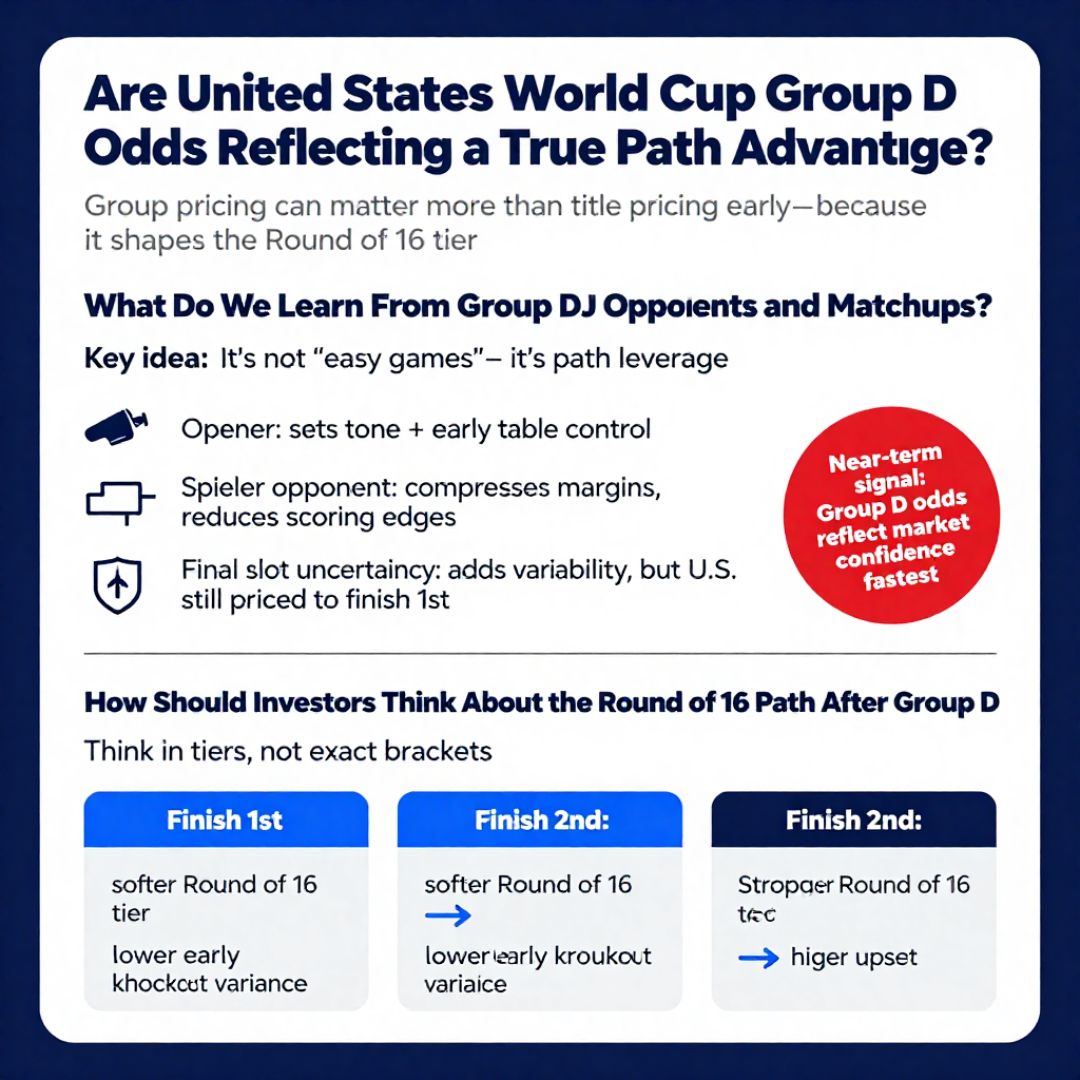
What Do We Learn From Group D Opponents and Matchups?
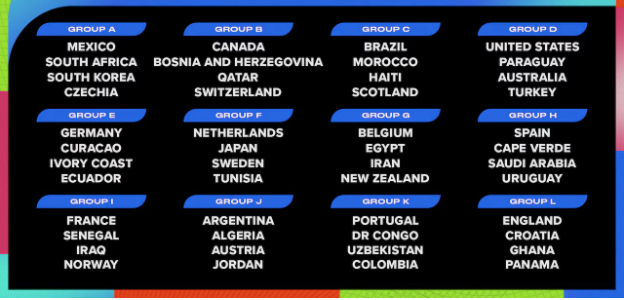
Group D is priced as favorable for the U.S. The key takeaway is not “easy games,” but path leverage:
- The opener sets psychological tone and early table control.
- A disciplined spoiler-style opponent can compress margins.
- The final group slot uncertainty adds variability, but the U.S. is still priced as the favorite to finish first.
This is why United States World Cup Group D odds can be the cleanest near-term signal of market confidence.
How Should Investors Think About the Round of 16 Path After Group D?
Think in tiers rather than exact brackets:
- Finish 1st: higher chance of drawing a softer Round of 16 tier; lowers early knockout variance.
- Finish 2nd: greater probability of facing a stronger opponent sooner; increases upset risk.
- Finish 3rd: outcomes depend on format mechanics, but you should treat it as a higher-variance path with less control.
Scenario Tree (Conceptual)
- Win Group D (1st) → Round of 16: Mid-tier opponent band → Quarterfinal: High-tier band
- Finish 2nd → Round of 16: High-tier opponent band → Quarterfinal: Elite band
- Finish 3rd → Qualification depends on broader group results → Typically highest variance band
The practical point: even if title odds stay low, a first-place group finish can lift quarterfinal probability more than most headline narratives do.
What World Cup Risks Could Break the USMNT Pricing Thesis?
A sound pricing analysis must stress-test downside before assuming upside. The United States in the World Cup Prediction Market will not move sustainably higher unless these risks are addressed or priced more cheaply than they should be.
- Elite Knockout Barrier: Deep runs require beating multiple elite opponents in sequence. Even small underdog probabilities compound; winning two “coin-flip” games back-to-back is much harder than winning one.
- Non-CONCACAF Gauntlet: A quarterfinal run likely demands 4–5 high-intensity matches against non-regional opponents, where tactical variance and tempo swings tend to be harsher.
- Defensive Depth Risk: A thin center-back rotation means one injury can materially change match equity, especially if the system depends on specific profiles.
- Midfield Health Volatility: If the balance player in midfield isn’t near full fitness, defensive transitions become unstable and the team’s ability to protect leads drops—exactly where tournament probability can collapse.
- Host Pressure Premium: Home advantage can help, but it can also inflate expectations. When narrative confidence exceeds true probability, you often get harsh repricing after one disappointing result.
What Is a Realistic USMNT World Cup Quarterfinal Benchmark in 2026?
Instead of fixating on “win it all,” measure progression. The United States in the World Cup Prediction Market can be evaluated through a simple ladder of conditional probabilities.
How Should You Model Round of 16 vs Quarterfinal vs Semifinal Likelihood?
Use a three-step framework:
-
P(Round of 16)
Driven largely by United States World Cup Group D odds and match-level variance in the opener and second fixture.
-
P(Quarterfinal)
Depends on opponent tier in the Round of 16 and how stable the team looks in defending transitions. This is where lineup flexibility can matter most.
-
P(Semifinal)
Requires consecutive wins versus top-tier opponents. Even if the Round of 16 is favorable, the semifinal path usually demands elite-level consistency.
This approach gives a measurable benchmark the U.S. doesn’t need to be priced as a top title favorite to be a credible quarterfinal candidate.
How Does Market Concentration on Favorites Affect USA Pricing?
Title markets are typically concentrated among a small group of elite European contenders, which compresses probability toward the top and leaves little room for mid-tier teams.
When you compare implied probabilities, the question becomes whether that concentration fairly reflects structural strength—or simply reinforces historical bias.
Favorites vs USA (Sportsbook anchors)
| Team tier | Example odds | Implied Probability (approx.) |
| Top favorite | 4–1 | 20% |
| Next tier | 6–1 | 14% |
| Contender tier | +750 | 12% |
| USA | 60–1 | 1.6% |
So, the question isn’t whether the U.S. belongs in the top tier today. It’s whether the gap between ~1–2% title probability and ~44% Group D win probability implies a market that may be conservative on “how far” the U.S. can go if the path breaks correctly.
How Can You Use Bitget Wallet to Participate Safely in World Cup Prediction Markets?
While Bitget Wallet does not directly host World Cup prediction markets, it serves as a secure bridge to on-chain prediction dApps through its built-in Web3 browser. As a non-custodial wallet, it allows you to retain full control of your assets while interacting with decentralized platforms—an essential layer of risk management when participating in market-based events.
Bitget Wallet: Strong Gateway to On-Chain Prediction Markets!
-
Non-custodial security with optional MPC protection
Maintain full asset ownership while benefiting from advanced security architecture designed to reduce single-point-of-failure risk.
-
Cross-chain connectivity
Access major ecosystems across multiple blockchains, giving you flexibility to interact with prediction markets wherever liquidity exists.
-
Integrated DEX aggregation
Swap stablecoins efficiently through optimized routing that automatically searches for the best available execution.
-
Stablecoin storage and yield tools
Securely manage USDT, USDC, and other stable assets while optionally deploying idle balances into integrated earning products.
-
Built-in Web3 browser
Discover and connect to decentralized applications directly within the wallet—no need to switch between multiple platforms.
-
User-friendly design
A streamlined interface helps reduce operational errors, which are often the biggest risk factor for new Web3 participants.
Manage stablecoins securely and explore cross-chain Web3 markets in one beginner-ready app—download Bitget Wallet to store assets, swap across chains, and connect confidently to on-chain prediction platforms.
Related Reading on World Cup Prediction Markets Trading
If you're exploring World Cup prediction markets — from understanding how yes-no contracts work to evaluating legality and risk management — these guides will help you trade event-based probabilities more strategically.
🔹 Understanding Prediction Market Basics
- What Is a Prediction Market in Crypto and How Blockchain-Based Prediction Markets Work
- What Is a Yes No Market: How Investors Trade Probabilities Using Yes-or-No Contracts
🔹 World Cup Prediction Market Strategy
- World Cup Prediction Market: Complete Guide to Trading the 2026 World Cup
- World Cup Predictions 2026: Who Will Win Based on Power Rankings and Market Trends
- World Cup Odds 2026: How Prediction Markets Compare with Traditional Betting Lines
- World Cup Dark Horses 2026: Underrated Teams That Could Shock the Tournament
- United States in the World Cup Prediction Market: Can the Golden Generation Outperform the Odds?
🔹 Legal & Risk Considerations
- Is Prediction Market Legal: US Federal vs State Laws Explained
- What You Need to Know About Prediction Market Before You Bet
Conclusion
United States in the World Cup Prediction Market sends two messages at the same time: the U.S. is viewed as a strong contender in the group stage, yet remains a distant long shot for the title. That gap is precisely where a clear pricing framework becomes essential—to separate structural advantages like schedule and group composition from emotion-driven enthusiasm. A rational approach starts with understanding how the market prices outcomes, converting odds into implied probabilities, and treating Group D as the first strategic lever. From there, the team must be stress-tested under tougher scenarios—key injuries, defensive depth concerns, or facing a European powerhouse in the knockout stage—to evaluate how much pressure the implied probability can truly withstand. From an investor’s perspective, targeting a quarterfinal appearance is a far more realistic benchmark than chasing a championship narrative.
If you plan to participate in the World Cup Prediction Market on-chain, prioritize control and transparency. With Bitget Wallet, you can seamlessly connect to prediction dApps, respond quickly as markets reprice, and maintain full self-custody of your stablecoins and digital assets at every step of the transaction process.
Download Bitget Wallet today to engage in the World Cup Prediction Market 2026 with proactive strategy and complete asset control.
Sign up Bitget Wallet now - grab your $2 bonus!
FAQs
1. What does United States in the World Cup Prediction Market?
It refers to how prediction market prices translate the U.S. team’s chances into an implied probability. A contract trading at $0.02 implies roughly a 2% chance, while a higher price implies higher probability. It’s a live, crowd-priced signal rather than an editorial opinion.
2. How do USMNT World Cup odds convert to implied probability?
Convert positive American odds using 100 / (odds + 100). For example, +125 becomes 100/225 ≈ 44.4%. For longshot fractional odds like 60–1, treat it like +6000 for a fast estimate: 100/6100 ≈ 1.64%.
3. Are USA World Cup 2026 betting odds pricing in home advantage?
Partially. Home advantage can raise group-stage confidence, but sportsbooks also include vig and adjust for public demand. A better approach is to compare group odds (path) with title odds (ceiling) and see whether the gap feels too wide for your progression benchmark.
4. What is a realistic USMNT quarterfinal probability in 2026?
A realistic benchmark model starts with the probability of winning Group D, then applies an opponent-tier adjustment for the Round of 16, then another for the quarterfinal. Quarterfinal likelihood is usually more sensitive to bracket path and health than to title-market narratives.
5. How is a World Cup prediction market USA price different from sportsbook odds?
Prediction market prices are trader-set and typically map directly to implied probability, while sportsbook odds are bookmaker-set and include margin. Prediction markets can react faster to news, but sportsbooks can be more stable when prediction market liquidity is thin.
Risk Disclosure
Please be aware that cryptocurrency trading involves high market risk. Bitget Wallet is not responsible for any trading losses incurred. Always perform your own research and trade responsibly.