


How to Use QR Payment Mongolia with Bitget Wallet?
How to Use QR Payment Mongolia starts with understanding that Bitget Wallet lets users scan supported QPay QR codes, pay with USDT or USDC from their wallet, and complete a familiar payment flow while merchants receive local currency through the existing payment system. The experience feels similar to local scan-and-pay apps, but the backend combines Mongolia’s QR payment infrastructure with stablecoins and digital asset settlement.
QR payments are already practical in Mongolia because QPay supports simple QR-based transactions across everyday payment scenarios. As more users look for straightforward ways to spend digital assets in real-world settings, Bitget Wallet helps connect crypto with daily payments through direct in-app QPay QR support.
In this article, we’ll explain how QR payments work in Mongolia, how to use them with Bitget Wallet, and what to check before you pay.
Key Takeaways
- How to Use QR Payment Mongolia is simple with Bitget Wallet: scan a QPay QR code, pay with USDT or USDC, and complete transactions in a familiar flow.
- QR Payment Mongolia is built around QPay, making scan-and-pay transactions practical for everyday merchant and service payments in Mongolia.
- Bitget Wallet supports QPay QR scanning directly, letting users spend stablecoins while merchants receive local currency through the existing payment settlement flow.
Overview of QR Payment Mongolia
QR Payment Mongolia is built around QPay, one of the most widely used QR-based payment systems in Mongolia. Because QPay supports fast scan-and-pay transactions across common payment scenarios, Mongolia has become a practical market for wallet-based QR payment experiences tied to everyday local payment behavior.
Core logic:
-
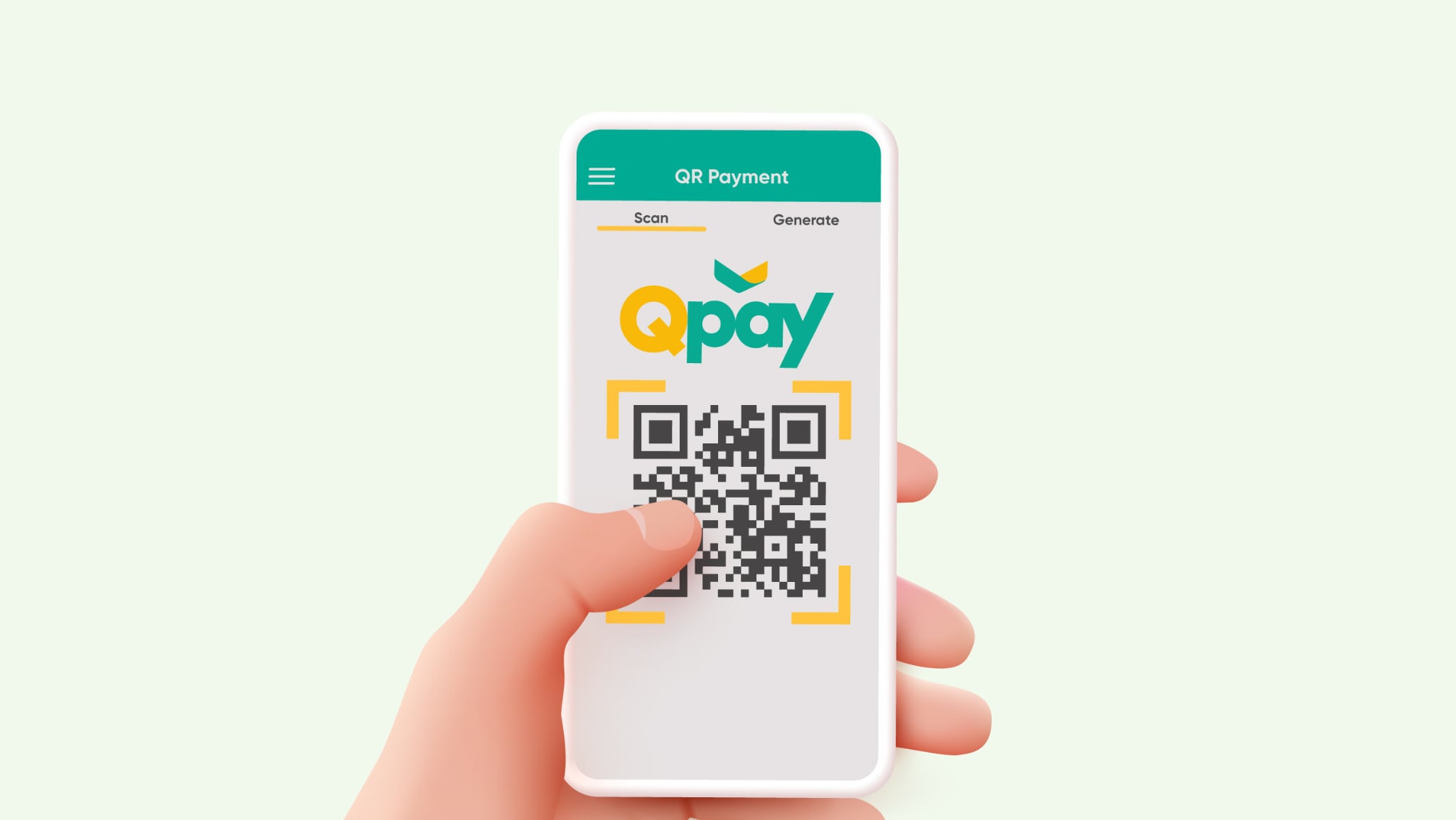
Users scan a QPay QR code:
The customer scans a supported QPay QR code using a compatible wallet or payment app.
-
Merchants receive local currency:
The merchant receives local currency through the existing payment settlement flow.
-
Bridge between traditional payments and crypto-enabled payments:
The experience feels like local QR payment behavior, while supported wallets like Bitget Wallet can connect this flow with stablecoins and digital assets.
Source: baiduri.com.bn
How does it work?
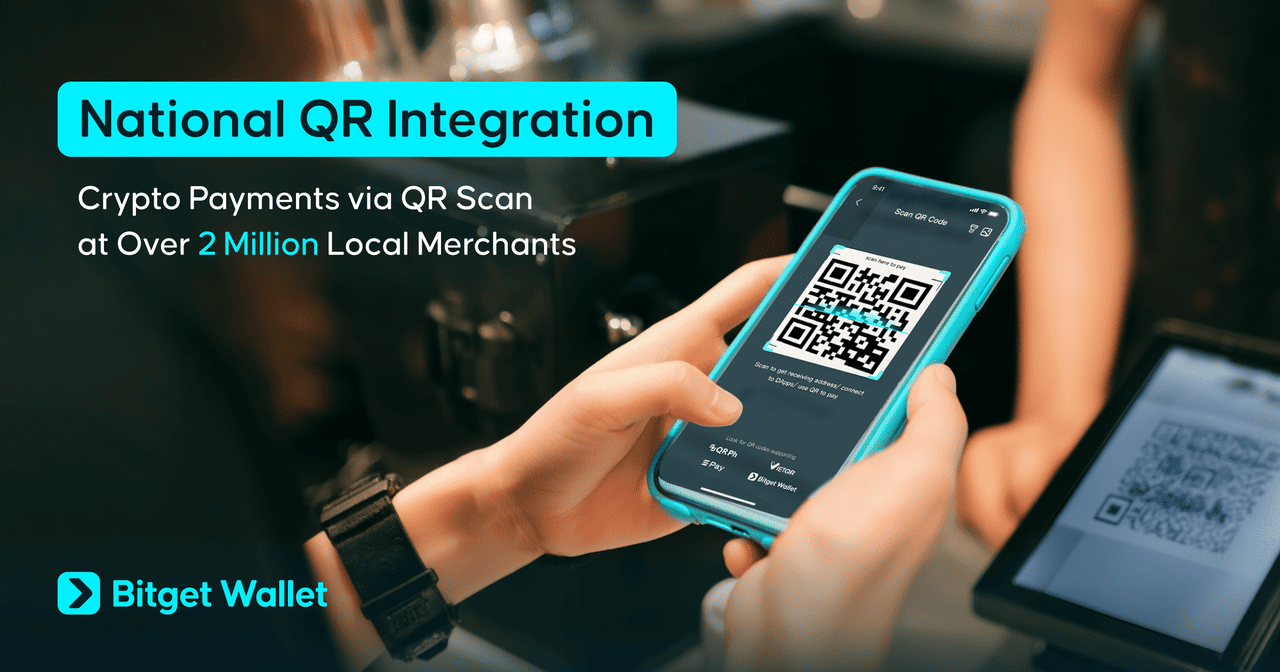
QR Payment Mongolia works through a simple payment flow that feels familiar to local users while fitting into Mongolia’s QR payment environment.
-
Step 1: Merchant displays a QPay QR code
A merchant shows a QPay QR code linked to their payment details.
-
Step 2: User scans using a supported wallet
The customer opens the scan feature in Bitget Wallet and scans the code.
-
Step 3: User confirms the payment amount
The user checks the amount, recipient, and payment details shown on the confirmation screen.
-
Step 4: Supported digital assets are used in the payment flow
In a wallet-supported model such as Bitget Wallet’s National QR integration, USDT or USDC can be used to complete the transaction.
-
Step 5: Merchant receives local currency through settlement
The merchant receives local currency through the existing settlement flow, so the payment experience remains compatible with everyday merchant behavior in Mongolia.
The experience feels like a local QR payment flow in Mongolia, but in supported cases the backend can integrate stablecoins and wallet-based payment tools without changing how the merchant gets paid.
Where to Use QR Payment Mongolia?
That question matters because QR Payment Mongolia is designed for practical, everyday payment use. QPay can fit naturally into local retail stores, restaurants, cafés, small merchants, and selected service payment scenarios where QR-based checkout is already familiar.
You can also think of QR Payment Mongolia as part of a broader daily payment behavior rather than a niche feature. Instead of relying only on a bank account or local payment app, supported users can access a similar payment experience through Bitget Wallet and use stablecoins in a way that feels closer to normal consumer payments.
How to Use QR Payment Mongolia with Bitget Wallet?
How to Use QR Payment Mongolia with Bitget Wallet is simple once your wallet is funded and ready. The process feels familiar: scan, confirm, and pay in just a few steps. Before starting, make sure your wallet is set up, your USDT or USDC balance is available, and you hold enough native coins for gas fees. Bitget Wallet supports National QR payments including Mongolia (QPay), allowing users to pay with stablecoins while merchants receive local currency.
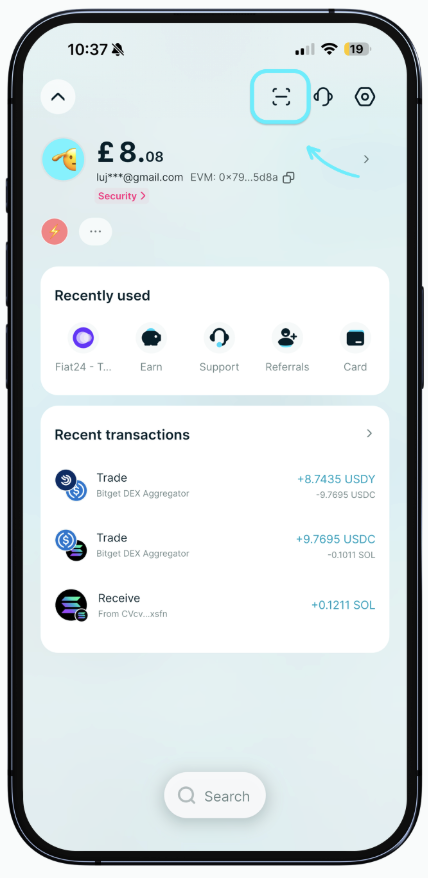
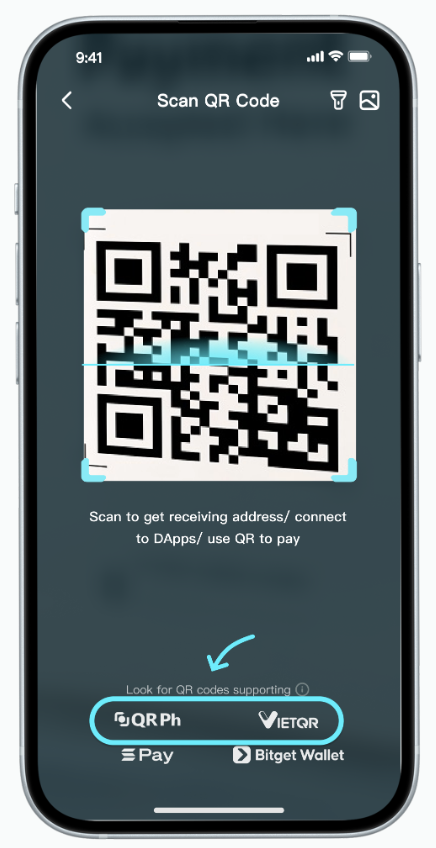
Step 1: Open the scan feature
- Go to Home: open Bitget Wallet and enter the main home screen.
- Tap your profile picture: this takes you to the wallet tools area.
- Tap the Scan icon: select the scan function to access QR payment tools.
- Choose the supported national QR payment flow: this is where the QPay Mongolia payment flow begins.
This step opens the payment interface used to scan supported QPay QR codes directly inside the app.
Step 2: Prepare your wallet balance
Deposit USDT or USDC into your wallet before paying so the transaction can be completed without interruption.
- Base: fund your wallet with supported stablecoins on the Base network.
- BNB Chain: deposit USDT or USDC on BNB Chain if that is your preferred payment network.
- Ethereum: make sure your Ethereum-based stablecoin balance is available.
- Solana: prepare supported stablecoins on Solana for smoother lower-fee payments.
- Tron: deposit USDT or USDC on Tron if you plan to use that network.
Your funds will be deducted from your stablecoin balance, and settlement is handled automatically during the supported payment flow.
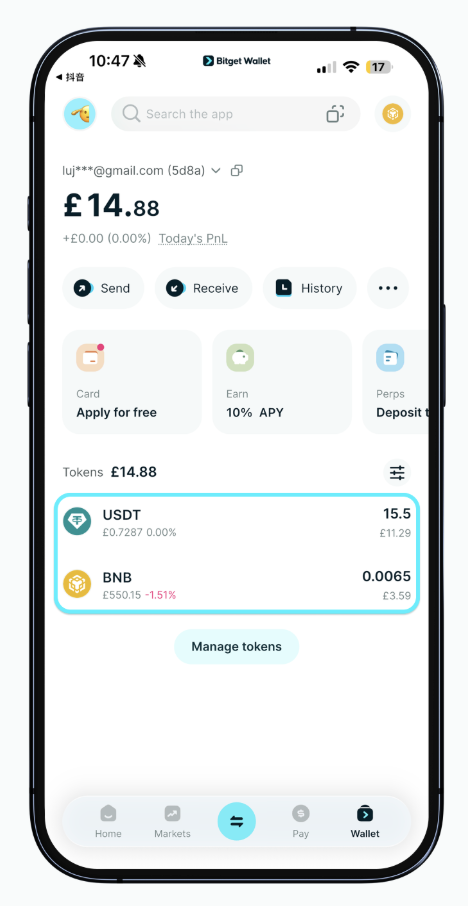
Step 3: Add native coins for gas fees
You also need native coins to cover network gas fees because QR Payment Mongolia with Bitget Wallet uses blockchain-based assets in the payment process. For example, if you spend USDT on BNB Chain, you need some BNB in the same wallet to pay the gas fee. If you use USDT on Ethereum, you need ETH. If you use a Solana-based asset, you need SOL for gas.
BNB Chain and Solana usually offer lower fees, so they may be more practical for smaller and more frequent payments. Ethereum and Tron can be relatively more expensive in some cases, so it is worth checking the fee before you confirm.
Step 4: Scan the QPay QR code and review payment details
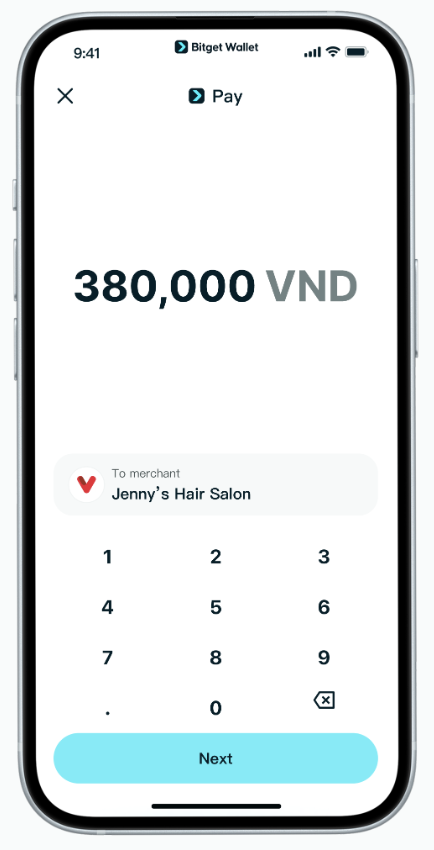
- Scan the merchant’s QPay QR code: point your Bitget Wallet scanner at the QPay QR code shown by the merchant.
- Verify the amount: check that the payment amount is correct before continuing.
- Check the token used: confirm which stablecoin and network are selected for the payment.
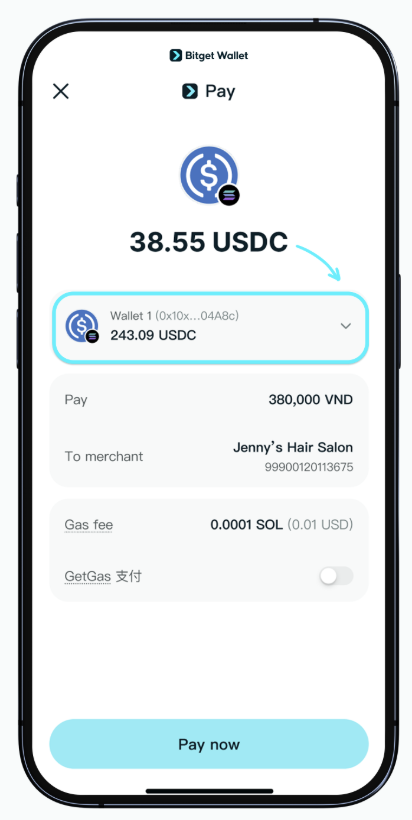
The system may automatically choose the token type with the highest available balance. Users can also switch between other token options by tapping their wallet balance on the payment page. Even when the selection is automatic, users should still review the payment details carefully before confirming.
Step 5: Confirm and complete the payment
- Amount: review the payment amount shown on the confirmation page.
- Token: verify that the correct token is selected.
- Gas fee: check the network fee before proceeding.
- Check transaction limits: make sure your payment is within the supported limits for Mongolia:
- 500 USD per transaction
- 5,000 USD daily limit
- No monthly limit
- Tap Confirm: approve the transaction to complete the payment.
After confirmation, Bitget Wallet processes the payment so the merchant receives local currency, while the user pays with supported stablecoins such as USDT or USDC. In most cases, the recipient receives funds within a few seconds.
Step 6: Check your payment history
Go to Pay → History to track past payments and verify whether your QR Payment Mongolia transaction was completed successfully.
This helps users confirm payment status, review recent activity, and keep a record of their QPay QR transactions inside Bitget Wallet.
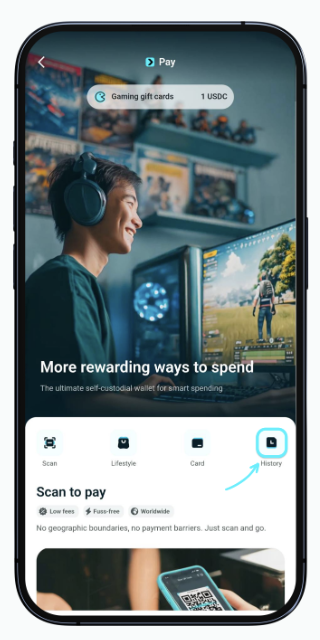
These steps make QR Payment Mongolia feel as easy as using a local QPay payment app, while still letting users spend digital assets directly from Bitget Wallet.
What to Do Before Using QR Payment Mongolia?
Before you use QR Payment Mongolia, understanding How to Use QR Payment Mongolia correctly means checking key factors like supported tokens, networks, gas fees, payment confirmation, and wallet balance. These details help reduce errors and make QR payments smoother when using Bitget Wallet.
-
Supported assets and networks:
USDT and USDC are supported, with payment available on Base, BNB Chain, Ethereum, Solana, and Tron. Make sure your wallet is funded on a supported network before paying.
-
Gas fee considerations:
QR payments are on-chain transactions, so you must have enough native tokens to cover gas fees before confirming.
-
Lower-fee networks:
BNB Chain and Solana are often more cost-efficient for everyday payments compared with higher-fee networks such as Ethereum.
-
Payment confirmation:
Always verify the amount, merchant, and token before confirming. The system may auto-select a token based on your balance.
-
Payment speed:
Most QR payments should complete quickly. If a payment takes longer than a few minutes, check transaction history or contact customer support.
-
Practical reminder:
Always double-check the QR code, amount, token, network, and available balance before confirming any payment.
What Types of QR Payments Are Common in Mongolia?
QR Payment Mongolia is best understood through real-life QPay payment scenarios rather than only technical payment infrastructure. The most relevant use cases include merchant checkout, small business payments, service payments, and everyday QR-based transactions.
-
Merchant payments:
A merchant displays a QPay QR code and the customer scans and pays.
-
Retail checkout:
This is useful for stores, cafés, and daily shopping scenarios where a simple scan-and-pay flow is preferred.
-
Service payments:
Selected service providers may support QR-based payment collection.
-
Small business payments:
QR payment is practical for smaller merchants because it is simple, fast, and easy to present at checkout.
-
Everyday payment behavior:
The scan-and-pay experience feels natural for users who are already familiar with local QR payment systems.
This is why QR Payment Mongolia is not only about payment technology. It is also about matching how people already prefer to pay in everyday offline situations and making that flow accessible to crypto users.
Bitget Wallet: The Best Place to Use QR Payment Mongolia
How to Use QR Payment Mongolia becomes more practical with Bitget Wallet, which combines self-custody, stablecoin utility, and direct QPay QR scanning in one smooth flow. In a payment environment where QR-based checkout already feels familiar, Bitget Wallet turns USDT and USDC into real spending tools by letting users scan, pay, and complete transactions with automatic conversion handled in the payment process.
How does Bitget Wallet make QR payments more practical for everyday use?
As QR payments are already familiar in Mongolia through QPay, the key is making crypto spending feel just as simple. Bitget Wallet enables a scan-and-pay experience closer to local payment behavior while allowing users to spend supported digital assets from a self-custody wallet.
-
QPay QR support:
Users can scan supported QPay QR codes directly in the app.
-
Stablecoin utility:
Users can pay with USDT or USDC across Base, BNB Chain, Ethereum, Solana, and Tron.
-
Local settlement experience:
Payments are completed using crypto while the merchant still receives local currency through the existing payment system.
-
All-in-one wallet flow:
Payment, storage, and token management are integrated in one place.
-
Cross-chain flexibility:
Users can choose supported assets from multiple networks before making a payment.
-
Familiar UX:
The scan-and-pay flow fits naturally with Mongolia’s existing QR payment habits.
Manage stablecoins and explore real-world QR Payment Mongolia more easily with Bitget Wallet!
Read more:
- How to Use QR payment Vietnam?
- How to Use QR Payment Brazil?
- How to Use QR Payment Laos?
- How to Use QR Payment Mongolia?
- How to Use QR Payment Cambodia?
- How to Use QR Payment Thailand?
Conclusion
How to Use QR Payment Mongolia with Bitget Wallet is a simple process once your wallet is ready. You need supported stablecoins like USDT or USDC, a small amount of native crypto for gas fees, and access to a supported QPay QR payment flow. After that, the experience is straightforward: open the scan feature, scan the QPay QR code, review the payment details, confirm the transaction, and complete the payment. That makes digital assets much more practical for real spending instead of leaving them as passive wallet balances.
Mongolia offers a usable QR payment environment through QPay, and Bitget Wallet makes that experience more useful for crypto holders by supporting direct QPay QR payment flow inside the app.
Download Bitget Wallet now to explore a simpler way to use digital assets for everyday QR Payment Mongolia.
Sign up Bitget Wallet now - grab your $2 bonus!
FAQs
1. How to Use QR Payment Mongolia with Bitget Wallet?
Open the scan feature, fund your wallet with USDT or USDC, keep enough native crypto for gas fees, scan the QPay QR code, review the payment details, and confirm the transaction.
2. Can I use USDT or USDC for QR Payment Mongolia?
Yes. Bitget Wallet supports QR payments using USDT and USDC on Base, BNB Chain, Ethereum, Solana, and Tron.
3. Do I need gas fees to use QR Payment Mongolia?
Yes. QR Payment Mongolia through Bitget Wallet still requires small gas fees because the payment is processed as an on-chain transaction.
4. What is QPay Mongolia in QR payments?
QPay Mongolia is the local QR payment system that supports scan-and-pay transactions in Mongolia.
5. What are the transaction limits for QR Payment Mongolia?
For Mongolia, the supported limit is 500 USD per transaction, 5,000 USD daily, and no monthly limit.
6. Will I get a refund if QR Payment Mongolia fails?
If the payment fails because of merchant issues or QR code errors, the deducted amount is usually refunded within 24 hours.
Risk Disclosure
Please be aware that cryptocurrency trading involves high market risk. Bitget Wallet is not responsible for any trading losses incurred. Always perform your own research and trade responsibly.
 How to Use QR Payment Thailand with Bitget Wallet?2026-04-13 | 5 mins



