World Cup Prediction Market: Complete Guide to Trading the 2026 World Cup
World Cup Prediction Market platforms operate as probability-based exchanges where traders buy and sell YES/NO contracts representing the likelihood of a team winning the 2026 tournament. Prices are quoted between 0 and 1, meaning 0.19 reflects a 19% implied probability. Unlike traditional sportsbooks, pricing is determined by supply and demand through platforms such as Kalshi and Polymarket, without embedded bookmaker margin. With the 2026 tournament expanding to 48 teams and 12 groups, probability dispersion and mid-tier volatility are structurally higher than previous editions.
Understanding how the World Cup Prediction Market works is essential for capital deployment during this expanded format. In this article, we’ll explore how to trade World Cup prediction market contracts, how to read World Cup prediction market odds, how to identify dark horses, and how to approach risk modeling in 2026 World Cup prediction markets — along with the underlying market mechanism that drives pricing.
Key Takeaways
-
0.19 = 19% implied probability.
Every contract price in the World Cup Prediction Market directly represents consensus probability, making pricing transparent and quantifiable.
-
Markets are supply-and-demand driven.
Liquidity determines tradability, and pricing adjusts continuously as traders reposition exposure in response to news and bracket developments.
-
World Cup prediction market risk management is critical.
In 2026 World Cup prediction markets, volatility modeling and disciplined capital allocation matter more than simply selecting favorites.
What Is a World Cup Prediction Market?
A World Cup Prediction Market is a binary exchange where traders buy and sell YES/NO contracts priced as implied probabilities. Contracts settle at 1 or 0 but remain tradable before settlement, defining the structure of modern 2026 World Cup prediction markets.
YES/NO Contract Mechanics
YES/NO contracts form the structural core of the World Cup Prediction Market, converting tournament outcomes into tradable probability instruments. Each contract reflects implied probability pricing and allows participants in 2026 World Cup prediction markets to actively manage exposure before final settlement.
- A YES contract settles at 1 if the outcome occurs and 0 if it does not.
- A NO contract settles inversely.
- A price of 0.19 equals 19% implied probability.
- Contracts can be sold before final settlement.
Because positions are tradable, participants do not need to wait for the final whistle to realize gains. If Spain rises from 0.19 to 0.23, a trader can exit at 0.23 and capture the price difference. This tradability differentiates prediction markets from static World Cup winner odds.
Supply & Demand Order Book Model
The World Cup Prediction Market operates through an order book where traders submit bids and asks, allowing prices to reflect real-time supply and demand. This mechanism enables continuous repricing in response to injuries, group-stage results, and liquidity shifts in 2026 World Cup prediction markets.
- Traders post bids (buy) and asks (sell).
- Prices clear where supply meets demand.
- Liquidity depth influences spreads and execution quality.
- Movements are reflected in live World Cup prediction market odds.
When injury news breaks or group-stage results shift bracket probabilities, contracts reprice instantly. There is no embedded bookmaker margin influencing adjustments.
Why Prediction Markets Forecast Efficiently?
The World Cup Prediction Market aggregates dispersed information through continuous repricing. As traders evaluate squad depth, tactical adjustments, and knockout path dependency, probability estimates converge toward market consensus.
Key structural advantages include:
- Continuous updating
- No built-in vig
- Transparent implied probability
- Direct comparison with sportsbook World Cup winner odds
In the 48-team format, where bracket asymmetry and mid-tier volatility increase, this mechanism becomes even more relevant. The World Cup Prediction Market therefore functions as both a trading venue and a live probability discovery system.
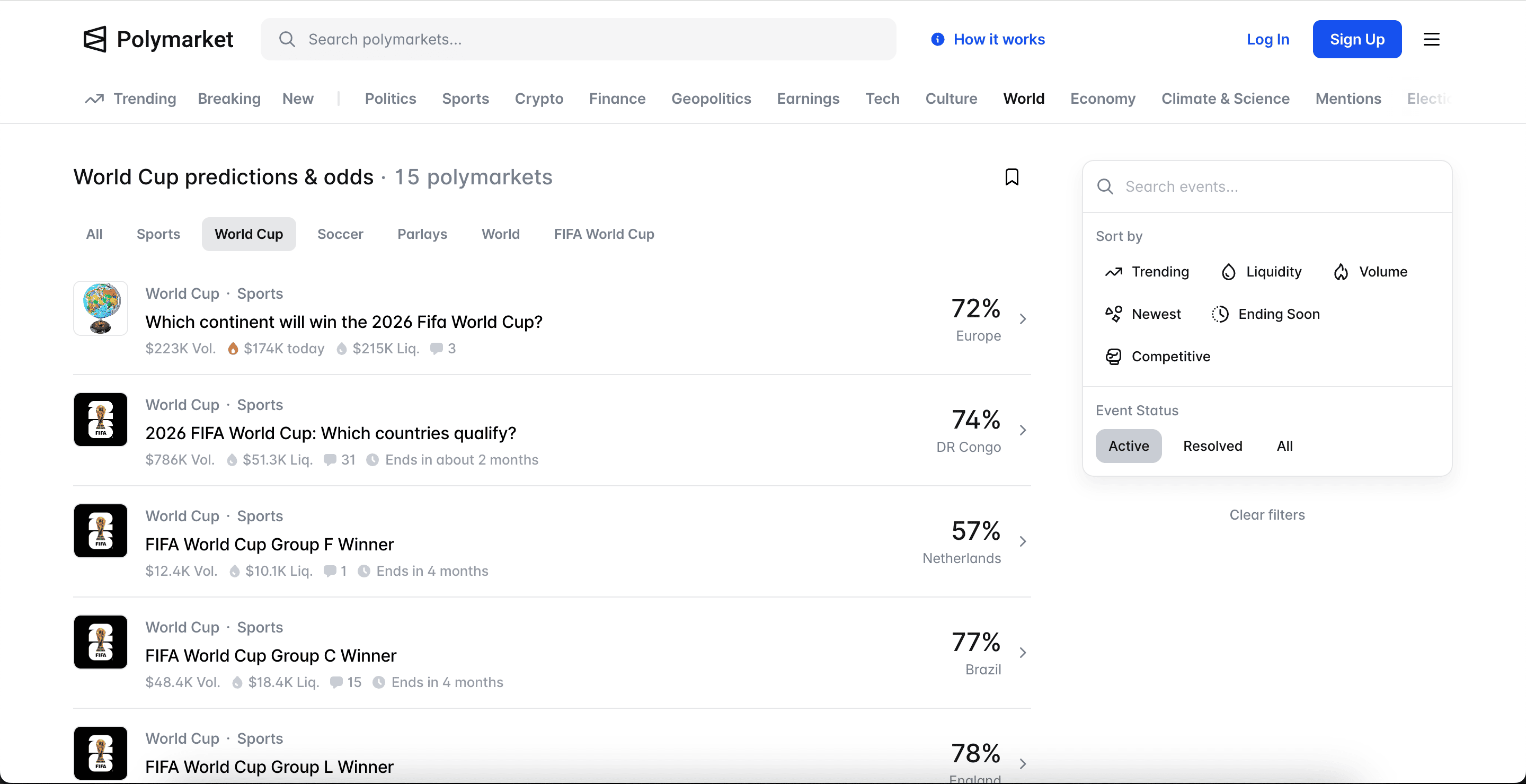
Source: Polymarket
How Does the 2026 World Cup Format Affect Prediction Pricing?
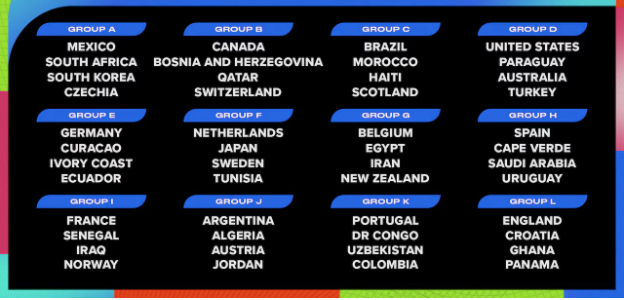
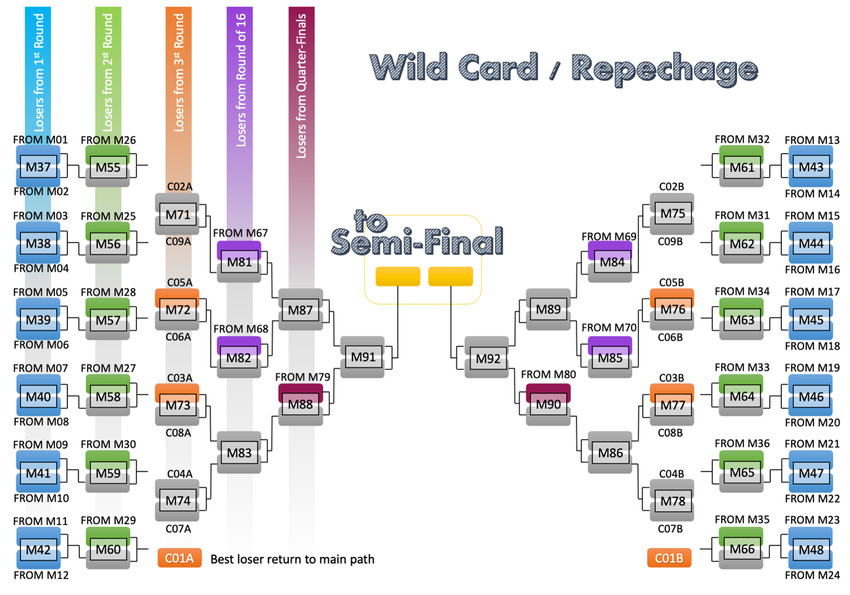
The 48-team format introduces 12 groups and expanded knockout rounds, increasing structural variance and widening probability distribution across the tournament. With more teams advancing and additional elimination stages, 2026 World Cup prediction markets experience greater pricing dispersion, higher upset probability, and more pronounced dark horse inefficiencies that directly impact prediction pricing dynamics.
48-Team Expansion Impact
The expansion to 48 teams increases total match volume and introduces more lower-seeded participants, statistically raising upset probability and widening implied odds ranges. In 2026 World Cup prediction markets, this leads to mid-tier probability inflation and greater long-tail pricing dispersion, directly affecting prediction pricing stability in early rounds.
- Higher upset probability
- Mid-tier probability inflation
- Increased volatility in early rounds
Source: ResearchGate
Group Draw Path Dependency
Group draw composition materially influences prediction pricing because early-stage probability is heavily path-dependent. In 2026 World Cup prediction markets, easier groups compress pricing spreads while harder groups discount early probability, and bracket asymmetry further shifts knockout-stage projections.
- Easier group compresses pricing
- Hard group discounts early probability
- Bracket asymmetry shifts knockout pricing
Knockout Structure Volatility
The expanded knockout structure amplifies volatility due to single-elimination dynamics, where one event can significantly alter tournament probability trees. As liquidity increases from the Round of 16 onward, 2026 World Cup prediction markets experience sharper repricing, making prediction pricing more reactive to injuries, tactical shifts, and information flow.
- Single-elimination variance
- Injury compounding effects
- Liquidity spikes in Round of 16 onward
Prediction Market vs Sportsbook Odds: What’s the Difference?
Prediction market vs sportsbook odds differ structurally in how prices are formed and how risk is distributed. Sportsbooks embed overround (vig) into pricing to guarantee margin, while prediction markets reflect trader consensus through supply-demand matching. Contracts are tradable and allow early exit, fundamentally changing risk management and pricing efficiency.
Comparison Table: Prediction Market vs Sportsbook Odds
| Feature | Prediction Market | Sportsbook |
| Pricing Source | Traders (order book consensus) | Oddsmakers |
| Margin | No built-in vig | Includes overround |
| Exit Early | Yes (sell contract anytime) | Rare |
| Liquidity Driven | Yes | No (house managed) |
Margin (Overround) Analysis
In sportsbooks, odds include embedded margin. For example:
Spain at +450 implies:
Implied probability = 100 / (450 + 100) = 18.2%
If the total implied probability across all teams equals 107%, the sportsbook overround equals 7%, which represents the house edge.
In a prediction market, pricing at 0.19 (19%) reflects direct market-implied probability without embedded vig. This structural difference explains why World Cup winner odds often differ between sportsbooks and prediction market platforms.
Tradability & Early Exit
Prediction markets allow participants to trade contracts before event settlement. This enables users to:
- Sell contracts before settlement
- Trade volatility rather than final outcome
- Apply active risk management strategies
Tradability is a core principle behind how to trade World Cup prediction market positions effectively.
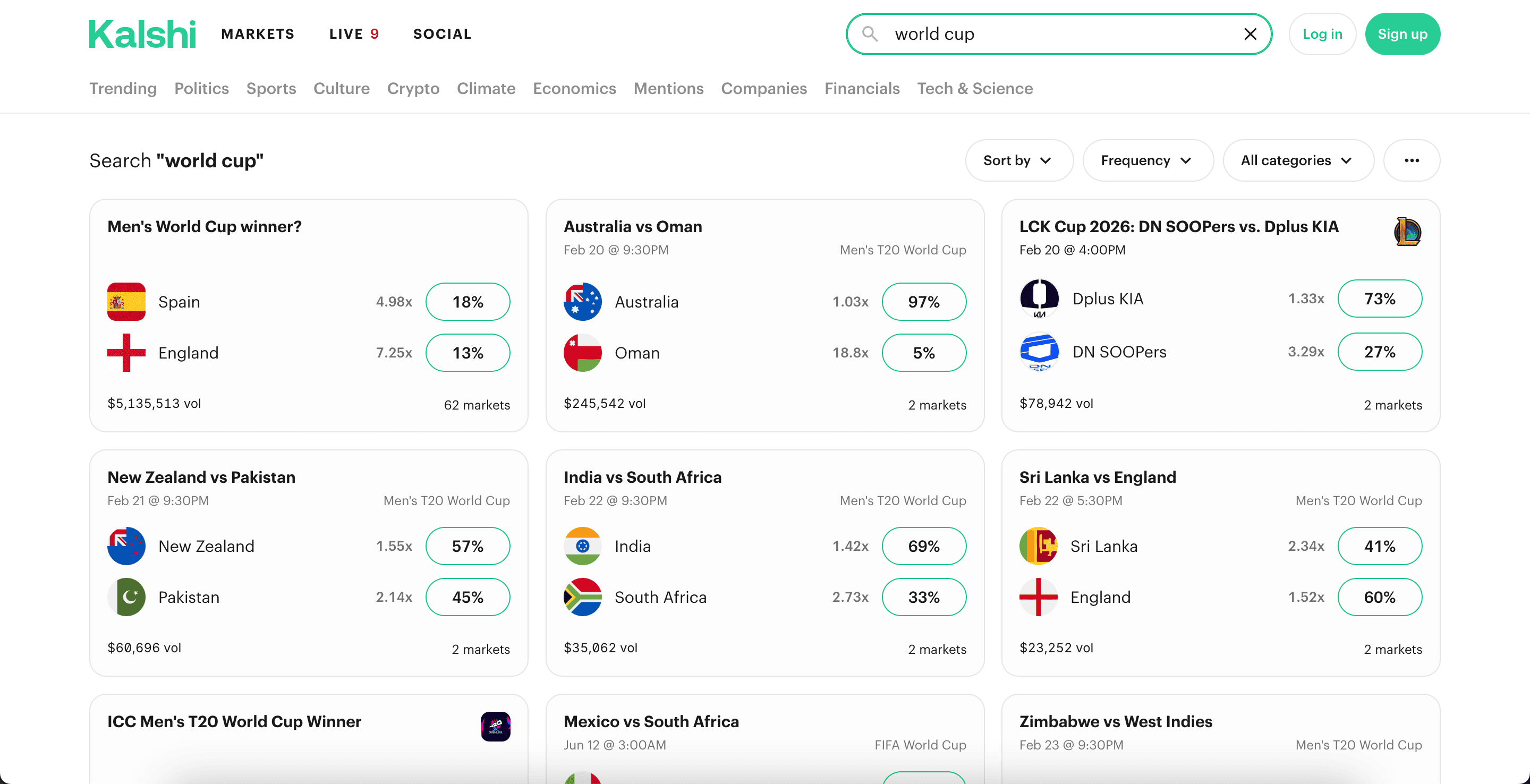
Liquidity & Price Discovery
Prediction markets operate through order book matching, where buyers and sellers determine price through continuous interaction.
- Order book matching
- Real-time repricing
- Platforms such as Kalshi and Polymarket enable continuous price discovery
This liquidity-driven structure leads to dynamic pricing that adjusts instantly to new information, unlike fixed-margin sportsbook models.
Source: Kalshi
How to Trade the World Cup Prediction Market?
To trade the World Cup Prediction Market, participants must identify probability mispricing, manage liquidity exposure, and size positions according to volatility. Effective execution in 2026 World Cup prediction markets requires disciplined World Cup prediction market risk management and continuous monitoring of live World Cup prediction market odds.
Identifying Mispricing
Successful trading begins with comparing fair value probability estimates against current market pricing. If a team trades at 0.19 but your model assigns a 24% probability, the gap represents potential edge within the World Cup Prediction Market.
- Compare internal probability models vs market price
- Detect overreaction to injury news or media narratives
- Core principle in how to trade World Cup prediction market contracts
Position Sizing Framework
Position sizing determines long-term sustainability more than individual trade selection. In 2026 World Cup prediction markets, volatility compression and expansion require dynamic exposure control.
- Allocate 1–3% of total capital per position
- Adjust exposure relative to liquidity depth
- Central to World Cup prediction market risk management
Tournament Timing Strategy
Timing within the tournament cycle materially affects pricing stability. Early stages carry wider dispersion, while later rounds compress probability spreads.
- Pre-tournament volatility driven by speculation
- Post-group stabilization after bracket clarity
- Knockout liquidity spike increases execution depth
- Monitor live World Cup prediction market odds continuously
How Can Bitget Wallet Support World Cup Prediction Market Participation?
Bitget Wallet provides non-custodial infrastructure for managing stablecoin assets that may be used in event-based markets. Secure asset control and cross-chain flexibility help traders maintain capital mobility while monitoring live World Cup prediction market odds during 2026 World Cup prediction markets.
Secure Stablecoin Management
Participation in the World Cup Prediction Market often requires maintaining capital in stablecoins for rapid execution. Bitget Wallet enables self-custodial asset control while supporting stablecoin liquidity management across event-based markets.
- Retain full private key ownership
- Manage stablecoin liquidity without centralized custody
- Maintain capital mobility for event-based markets
This structure reduces counterparty exposure while preserving execution readiness during volatility spikes.
Cross-Chain Flexibility
Liquidity fragmentation across platforms can slow execution if assets are siloed. Cross-chain functionality helps maintain capital flexibility when accessing different event-based platforms.
- Move assets efficiently across supported networks
- Support participation in 2026 World Cup prediction markets
- Maintain multi-platform readiness
This flexibility becomes increasingly important as live World Cup prediction market odds shift during knockout rounds.
Infrastructure Readiness During Volatility
Tournament volatility can compress execution windows. Preparing capital infrastructure before major repricing events allows traders to act without delay.
- Maintain execution flexibility
- Prepare stablecoin reserves before liquidity spikes
- Support structured World Cup Prediction Market trading
Infrastructure discipline complements World Cup prediction market risk management by ensuring operational continuity during high-variance phases.
How Does a Real Trade Work in the World Cup Prediction Market?
A real trade in the World Cup Prediction Market captures short-term volatility in 2026 World Cup prediction markets rather than relying on final tournament outcomes. By entering during probability overreaction and exiting before settlement, traders exploit shifts in live World Cup prediction market odds.
Scenario Example: Spain Volatility Trade
Spain trades at 0.19 (19%) in the World Cup Prediction Market.
An injury rumor surfaces and liquidity thins. The contract drops from 0.19 to 0.16.
You assess the rumor as temporary noise and enter at 0.16.
Later, the rumor is denied. The contract rebounds to 0.21, and you exit the position.
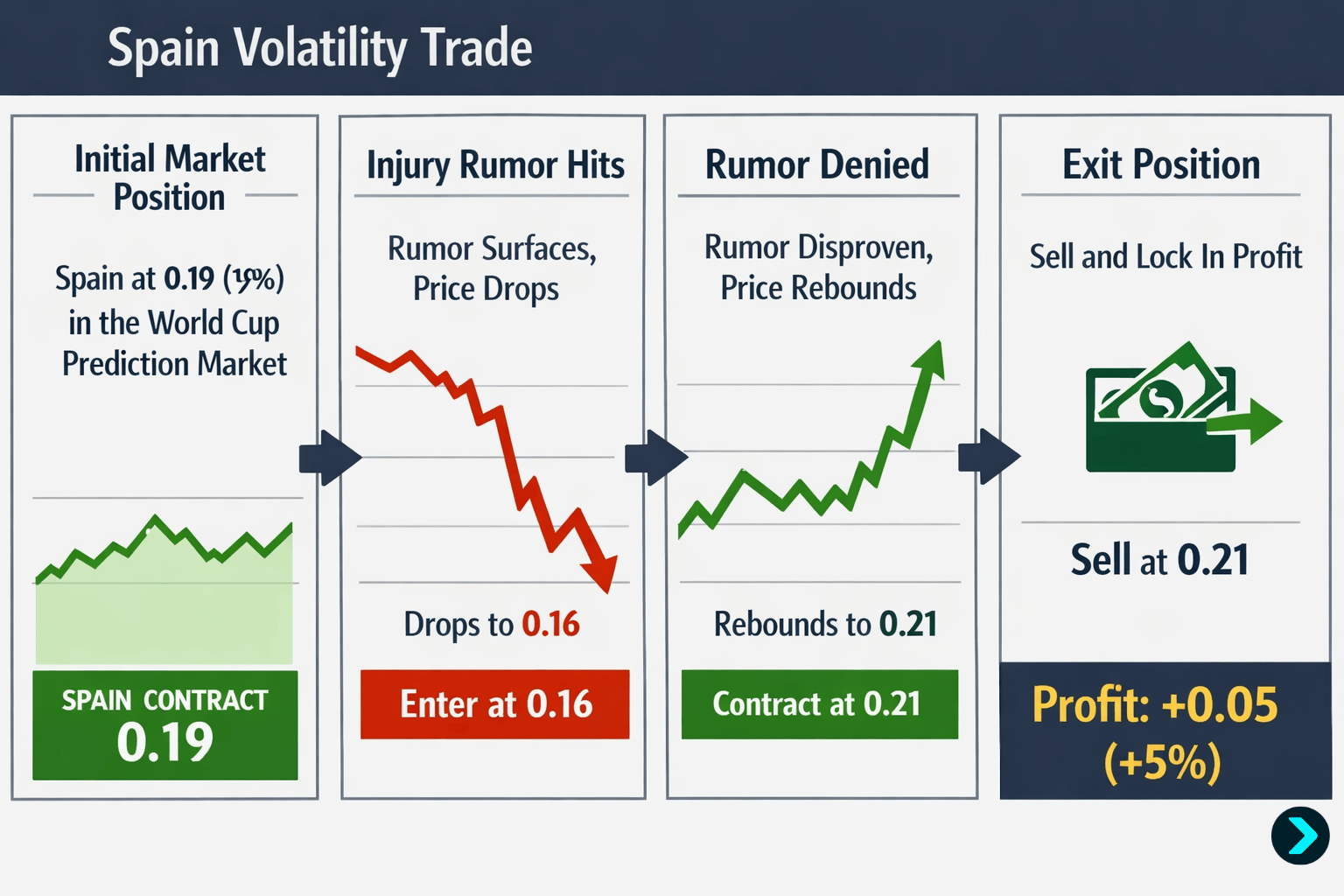
Return on Investment (ROI):
(0.21 - 0.16) / 0.16 = 31.25%
The 0.05 price increase represents a 31.25% return on capital deployed.
Spain does not need to win the tournament. The profit comes from probability repricing within the World Cup Prediction Market, not final settlement or headline World Cup winner odds.
This example shows how to trade World Cup prediction market contracts by focusing on probability mispricing rather than predicting the final champion.
Risk Exposure
Even volatility-based trades carry structural risks within the World Cup prediction market mechanism.
- Slippage risk – Wide bid/ask spreads reduce realized profit.
- Liquidity withdrawal – Thin markets limit exit ability.
- Information asymmetry – News may be partially accurate.
- Volatility clustering – Price may continue moving against position.
Effective World Cup prediction market risk management requires position sizing discipline and awareness of liquidity depth before entry.
How to Read World Cup Prediction Market Odds?
Understanding how to read World Cup prediction market odds requires converting contract prices into implied probabilities and interpreting liquidity and volume signals. Comparing pricing against traditional World Cup winner odds clarifies structural differences between prediction market vs sportsbook odds models.
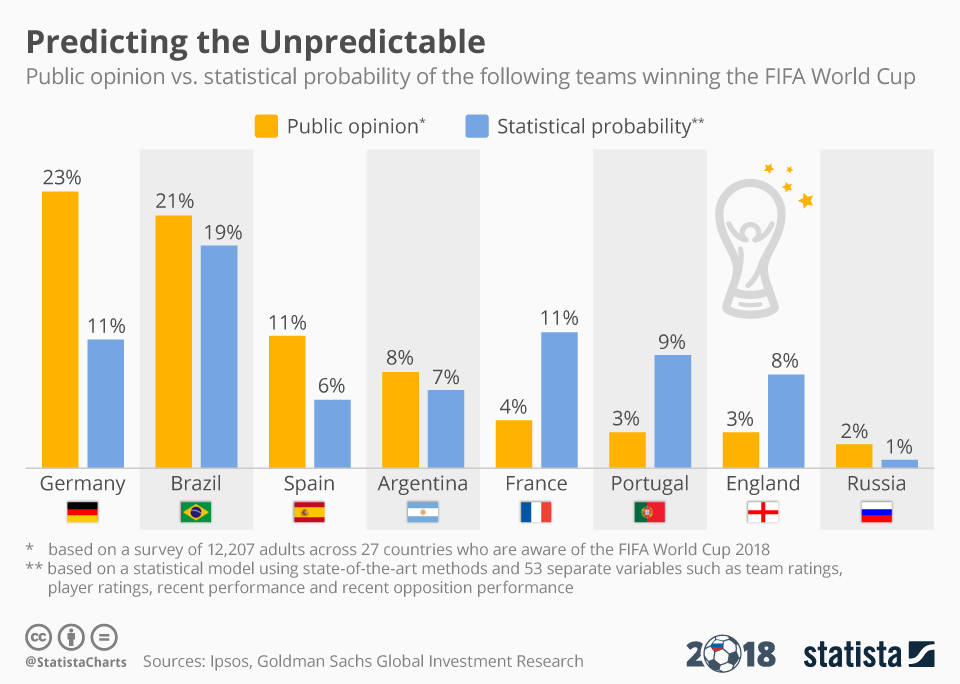
Convert Price to Probability
In the World Cup Prediction Market, contract prices directly represent implied probability, making interpretation straightforward and transparent. Understanding how to read World Cup prediction market odds begins with converting these prices into percentage likelihood.
- 0.19 = 19% implied probability
- 0.08 = 8% probability
- 0.25 = 25% probability
This transparency eliminates conversion complexity commonly found in American or fractional World Cup winner odds.
Source: Statista
Volume as Conviction Signal
Price alone does not fully explain market positioning within the World Cup Prediction Market. Trading volume provides additional context about conviction strength and liquidity conditions in 2026 World Cup prediction markets.
- High trading volume suggests stronger market consensus.
- Low volume increases slippage risk and pricing instability.
In 2026 World Cup prediction markets, liquidity depth often increases during major news events and knockout-stage matches.
Market Movers
Market movers reflect real-time adjustments in implied probability within the World Cup Prediction Market. Even small percentage changes can materially alter tournament projection models.
- Spain +1% indicates increased confidence.
- Germany −1% suggests declining implied probability.
Monitoring live World Cup prediction market odds helps identify momentum and overreaction dynamics within the World Cup Prediction Market.
Comparison With Sportsbook Lines
Comparing pricing structures clarifies how prediction markets differ from traditional bookmakers. Evaluating prediction market vs sportsbook odds reveals how margin, liquidity, and tradability affect implied probability.
- Sportsbooks embed margin (overround).
- Prediction markets reflect trader consensus without built-in vig.
Analyzing probability gaps reinforces the distinction between prediction market vs sportsbook odds and may reveal temporary mispricing opportunities.
How to Identify Dark Horses in the World Cup Prediction Market?
A World Cup prediction market dark horse typically trades between 4% and 10% implied probability and benefits from structural bracket advantages. In 2026 World Cup prediction markets, identifying undervaluation requires analyzing path dependency, defensive stability, and repricing behavior in live World Cup prediction market odds.
Probability Range Definition
In the World Cup Prediction Market, dark horses typically trade in the 4–10% implied probability range. This band reflects teams strong enough to reach late knockout rounds but not priced as primary favorites in 2026 World Cup prediction markets.
Teams below 3% are often structural long shots, while those above 12% are established contenders. The mid-tier range frequently contains the most mispricing potential.
Defensive & Tactical Signals
Dark horses in the World Cup Prediction Market often share measurable structural characteristics rather than headline attacking output. Defensive stability tends to outperform volatility in single-elimination tournaments, where one goal frequently determines advancement.
- Clean sheet consistency across qualification
- Tactical stability under tournament pressure
- Compact defensive structure suited to knockout variance
In high-variance knockout environments, defensive efficiency compresses probability gaps and increases upset potential, particularly within mid-tier pricing bands.

November 06, 2025 — Spain players celebrate during a UEFA Nations League clash, with speculation building ahead of the 2026 World Cup.
Spain’s recent performances have strengthened their reputation among pundits and fans as attention grows toward the expanded tournament and early discussions about contenders.
Source: Mirror
Group Path Modeling
Path dependency is one of the most overlooked drivers of pricing in 2026 World Cup prediction markets. Group composition and bracket alignment materially alter advancement probability before a ball is kicked.
- Easier group increases advancement probability
- Favorable knockout side reduces elite matchups
- Bracket imbalance shifts tournament tree probability
Because pricing in the World Cup Prediction Market reflects forward-looking projections, bracket asymmetry can create temporary inefficiencies in implied probability.

November 06, 2025 — Norway’s Jørgen Strand Larsen celebrates after scoring against Italy as discussions grow over potential dark horses for the 2026 World Cup.
Norway’s recent performances have prompted analysts and fans to consider them among emerging contenders ahead of the expanded 48-team tournament.
Source: Flashscore
Market Overreaction
Short-term narratives frequently distort implied probability in the World Cup Prediction Market. Because pricing adjusts continuously, temporary sentiment shocks can create brief inefficiencies in 2026 World Cup prediction markets.
- Media amplification of friendly losses
- Injury rumors without confirmed severity
- Public sentiment swings after one match
Monitoring live World Cup prediction market odds helps distinguish structural probability shifts from emotional noise. Disciplined traders focus on valuation gaps rather than reacting to headlines.
What Are the Main Risks in the World Cup Prediction Market?
Risk is structural in the World Cup Prediction Market, not incidental. Because contracts trade continuously and repricing can be abrupt, disciplined World Cup prediction market risk management is essential for navigating 2026 World Cup prediction markets.
World Cup prediction market risk management requires modeling volatility, injury shocks, liquidity slippage, and regulatory differences. Understanding how these factors interact within the World Cup prediction market mechanism is critical for capital preservation.
Volatility Modeling
Probability contracts can move 2–5% in a single session, particularly during lineup confirmations or knockout-stage matches. In compressed tournament windows, volatility clustering can amplify short-term drawdowns before equilibrium pricing returns.
Injury Shock Sensitivity
Star player injuries can shift implied probability by 3–7%, depending on positional importance and replacement depth. In the World Cup Prediction Market, markets often react before full medical clarity is available, increasing mispricing risk.
Liquidity Tier Risk
Thin markets widen bid/ask spreads and increase execution slippage. During off-peak hours or early tournament stages, limited depth can distort price discovery and raise transaction costs.
Settlement & Regulatory Differences
Settlement structure varies across platforms, particularly between US regulated exchanges and blockchain-based markets. These structural differences influence counterparty exposure and operational considerations within the World Cup prediction market mechanism.
How the World Cup Prediction Market Mechanism Works?
The World Cup prediction market mechanism functions as a continuous probability exchange rather than a fixed-odds betting system. Pricing is determined through order book interaction, allowing contracts to reflect real-time supply and demand throughout 2026 World Cup prediction markets.
Bid / Ask Matching
The World Cup Prediction Market uses an order book where buyers submit bids and sellers submit asks. When prices align, transactions clear and the contract price updates.
- Narrow spreads indicate strong liquidity
- Wider spreads signal thinner markets
- Spread compression improves execution efficiency
This structure eliminates bookmaker pricing discretion.
Continuous Price Discovery
Unlike sportsbooks, contracts do not freeze between updates. Pricing adjusts dynamically as traders incorporate injury news, lineup changes, or bracket developments.
- No odds freeze
- Real-time repricing
- Liquidity-driven adjustments
This continuous discovery process defines pricing efficiency within 2026 World Cup prediction markets.
Settlement
Settlement in the World Cup Prediction Market is binary and rules-based. Winning contracts settle at 1 and losing contracts settle at 0 once the official result is confirmed under the World Cup prediction market mechanism.
This binary structure ensures transparent payoff mechanics and removes pricing ambiguity at expiration.
Related Reading on World Cup Prediction Markets Trading
If you're exploring World Cup prediction markets — from understanding how yes-no contracts work to evaluating legality and risk management — these guides will help you trade event-based probabilities more strategically.
🔹 Understanding Prediction Market Basics
- What Is a Prediction Market in Crypto and How Blockchain-Based Prediction Markets Work
- What Is a Yes No Market: How Investors Trade Probabilities Using Yes-or-No Contracts
🔹 World Cup Prediction Market Strategy
- World Cup Prediction Market: Complete Guide to Trading the 2026 World Cup
- World Cup Predictions 2026: Who Will Win Based on Power Rankings and Market Trends
- World Cup Odds 2026: How Prediction Markets Compare with Traditional Betting Lines
- World Cup Dark Horses 2026: Underrated Teams That Could Shock the Tournament
- United States in the World Cup Prediction Market: Can the Golden Generation Outperform the Odds?
🔹 Legal & Risk Considerations
- Is Prediction Market Legal: US Federal vs State Laws Explained
- What You Need to Know About Prediction Market Before You Bet
Conclusion
World Cup Prediction Market trading requires understanding probability mechanics, liquidity dynamics, volatility exposure, and dark horse modeling. Unlike sportsbooks, contracts are tradable assets governed by real-time supply and demand rather than embedded margin.
Execution readiness is equally important. Secure capital management and cross-chain flexibility allow traders to respond efficiently to live World Cup prediction market odds throughout the 2026 tournament. With Bitget Wallet, traders can manage stablecoin liquidity securely and maintain full control over trading capital before volatility accelerates.
Download Bitget Wallet today to secure your capital, prepare stablecoin liquidity, and position yourself for disciplined participation in the World Cup Prediction Market.
Sign up Bitget Wallet now - grab your $2 bonus!
FAQs
1. Is the World Cup Prediction Market legal in the US?
The legality of the World Cup Prediction Market depends on platform structure. Some 2026 World Cup prediction markets operate under US regulation, while others use blockchain-based infrastructure.
2. How does settlement work in 2026 World Cup prediction markets?
In 2026 World Cup prediction markets, YES contracts settle at 1 if the outcome occurs and 0 if it does not. This binary structure defines the World Cup prediction market mechanism.
3. Can you hedge a World Cup Prediction Market position?
Yes. Traders can sell contracts or buy opposing YES/NO contracts before settlement to manage exposure in the World Cup Prediction Market.
4. Are prediction market odds more accurate than sportsbook odds?
Prediction market vs sportsbook odds differ structurally. Prediction markets reflect crowd-based pricing without embedded overround.
5. When do World Cup prediction markets become most stable?
World Cup prediction markets typically stabilize after final squad announcements and group draw confirmation.
Risk Disclosure
Please be aware that cryptocurrency trading involves high market risk. Bitget Wallet is not responsible for any trading losses incurred. Always perform your own research and trade responsibly.