


CPI Trading Strategy Guide: How to Trade Inflation Data Like a Pro
CPI trading strategy guide content is essential for traders looking to profit from high-impact economic events like inflation releases. The Consumer Price Index (CPI) measures inflation and directly influences interest rate expectations, making it one of the most important drivers of short-term market volatility.
For traders, CPI is not just a macro indicator—it is a catalyst for rapid price movement across forex, crypto, and equities. Understanding how to trade CPI data allows you to identify high-probability setups based on volatility, timing, and market expectations.
In this guide, you’ll learn a complete CPI trading strategy, including how to interpret forecast vs actual data, how to trade CPI based on timing, and how to apply smart money CPI trading concepts for better execution. Many traders are also searching for the best CPI trading strategy 2026 as inflation data continues to drive global market volatility.
Key Takeaways
- The most effective CPI trading strategy is based on forecast vs actual deviation, not the headline number. Markets react to surprises rather than expectations, making deviation the core trading edge.
- The best trades occur after confirmation, not during the initial volatility spike. Waiting for structure helps avoid false moves and improves execution accuracy.
- Timing, liquidity, and execution matter more than prediction in CPI trading. Traders who focus on confirmation and risk management perform better than those trying to guess outcomes.
CPI Trading Strategy Guide: How CPI Data Creates Trading Opportunities
CPI data creates trading opportunities by shifting inflation expectations and influencing central bank policy. When CPI deviates from forecasts, it changes interest rate expectations and triggers rapid repricing across markets. This leads to increased volatility and short-term trading setups that traders can exploit using a structured CPI trading strategy.
What CPI Measures for Trading Decisions
CPI data reflects changes in consumer prices and acts as a key signal for monetary policy and market sentiment. Traders use CPI to anticipate how inflation will influence interest rates and asset price direction.
- Inflation → interest rates → price movement
- The inflation data impact on markets drives asset repricing
- Changes in Fed interest rate expectations influence risk assets
When inflation rises faster than expected, markets anticipate tighter monetary policy and shift toward risk-off behavior. When inflation falls, markets move toward risk-on conditions and increased buying pressure.
How CPI Releases Create Trading Opportunities
CPI releases trigger immediate market reactions as new inflation data is priced in. These reactions create short-term inefficiencies and volatility that traders can exploit.
- Volatility spikes immediately after release
- Rapid market repricing based on expectations
- Increased market volatility during CPI creates short-term setups
These conditions create repeatable trading opportunities, especially for traders who focus on timing, confirmation, and execution.
How to Trade CPI Using Forecast vs Actual Data
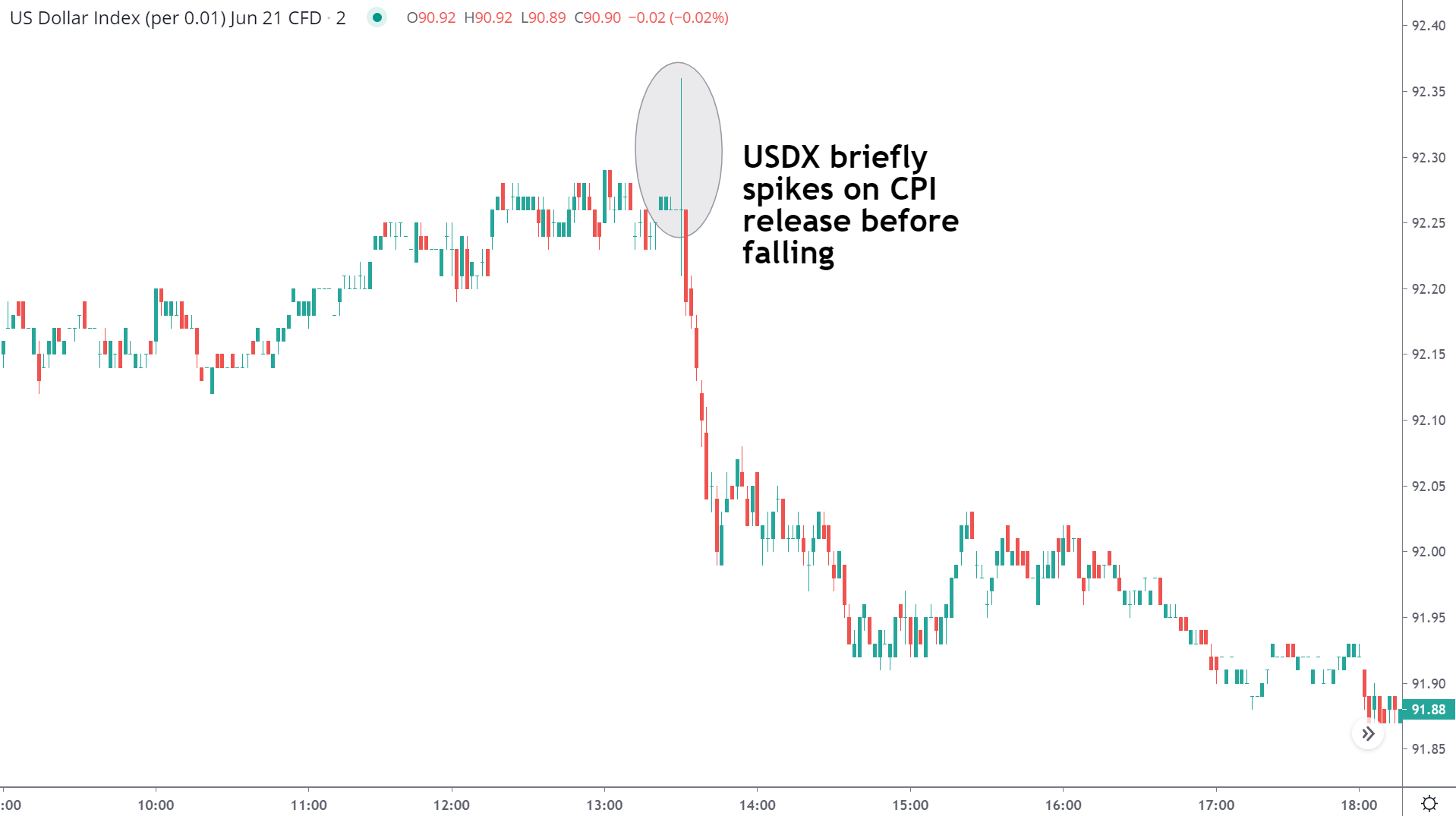
The core CPI trading strategy relies on the difference between forecast and actual data, as markets move based on surprises rather than expectations. When CPI deviates from forecasts, it shifts interest rate expectations and triggers immediate price reactions, making forecast vs actual comparison the key driver of trading opportunities. This forms the foundation of a CPI deviation trading strategy, where traders react to data surprises instead of relying on predictions.
Source: Forex
CPI Forecast vs Actual: The Core Trading Edge
The most important factor in any CPI trading strategy is the difference between forecast and actual data. Traders focus on CPI forecast vs actual because market reactions are driven by surprises, not the reported number itself.
| Scenario | Market Reaction | Trading Bias |
| Actual > Forecast | Hawkish expectations | Bearish risk assets |
| Actual < Forecast | Dovish expectations | Bullish risk assets |
Markets respond to CPI forecast vs actual differences rather than the headline number itself. Price movement is driven by how much the data deviates from expectations, not the data in isolation.
- Price moves are driven by deviation
- This forms the basis of a CPI deviation trading strategy
- Traders position based on surprise, not prediction
Bullish vs Bearish Scenarios Based on CPI Results
Once the CPI data is released, traders must quickly interpret whether the outcome is bullish or bearish for the market. Understanding these scenarios allows traders to align with market direction and apply a structured CPI data trading strategy.
| CPI Outcome | Market Sentiment | Trade Direction |
| Higher CPI | Risk-off | Sell |
| Lower CPI | Risk-on | Buy |
Different CPI outcomes create distinct market reactions based on inflation expectations and policy outlook.
- Higher inflation → tighter policy → bearish
- Lower inflation → easing expectations → bullish
This reaction framework is the foundation of any effective CPI data trading strategy, helping traders quickly align with market direction.
How to Trade CPI Based on Market Timing
CPI trading success depends on timing, as market behavior changes across different phases of the release. Understanding how volatility, liquidity, and positioning evolve allows traders to execute a more effective CPI trading strategy. This timing-based approach strengthens any CPI data trading strategy by aligning execution with market behavior.
Positioning Before CPI Release
Before the CPI announcement, markets typically move in a tight range as traders anticipate the data and adjust their positions. This phase reflects a CPI trading strategy before and after release, where preparation and scenario planning are more important than execution.
- Markets are relatively calm
- Traders position based on expectations
- Liquidity builds ahead of the event
Navigating Volatility During CPI Release
When CPI data is released, volatility increases sharply as markets react to new information and adjust pricing. This is the most unpredictable phase, forming the core of a CPI release trading strategy, where spreads widen and execution risks are highest.
- Price moves rapidly
- Spreads widen
- Slippage risk increases
Executing Trades After CPI Confirmation
After the initial volatility settles, clearer trends begin to form as institutional direction becomes visible. This is where traders can apply how to trade CPI data more effectively by entering after confirmation rather than reacting to the first move.
- Trends become clearer
- Institutional direction emerges
- Safer entries appear
How to Trade CPI Volatility with Smart Money Concepts
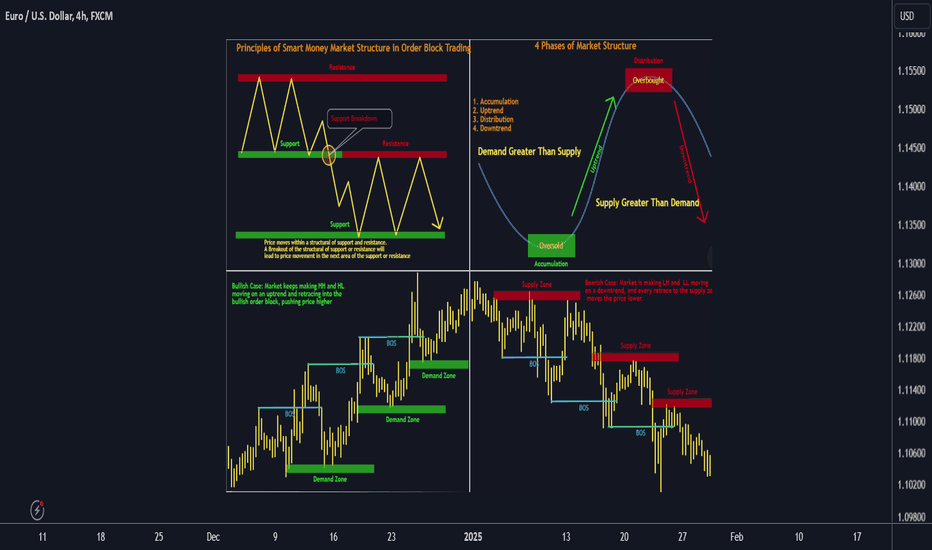
Smart money CPI trading focuses on understanding how institutional players operate during high-impact events like CPI releases. By identifying liquidity, avoiding false moves, and waiting for confirmation, traders can navigate volatility more effectively and improve execution.
Reading Smart Money Behavior During CPI Releases
During CPI events, institutional traders prioritize liquidity and avoid entering during unstable conditions. Instead of reacting immediately, they wait for positioning to develop before driving the real market move, which forms the foundation of smart money CPI trading.
- Wait for liquidity
- Avoid early entries
- Drive real market direction
Spotting Liquidity Sweeps and False Breakouts
CPI volatility often begins with misleading price movements designed to trigger stop losses and capture liquidity. Recognizing these patterns allows traders to avoid false entries and align with the actual direction of the market through liquidity sweep trading.
- Price often makes a fake move first
- Stops are triggered
- Then the real move begins
Executing Trades After Confirmation
The most effective way to trade CPI volatility is to wait for confirmation rather than reacting to the initial spike. This approach helps traders avoid traps and align with institutional flow.
- Wait for confirmation
- Avoid the first spike
- Follow market structure
Source: TradingView
Applying CPI Volatility Strategies in Crypto Markets
Crypto markets respond strongly to CPI releases due to their sensitivity to macro conditions and liquidity shifts. Understanding crypto CPI reaction allows traders to anticipate volatility in assets like BTC and ETH and apply how to trade CPI news in crypto effectively.
- Strong crypto CPI reaction in BTC and ETH
- Volatility increases during macro shifts
- Traders use stablecoins to manage risk
CPI Trading Strategy Guide: Step-by-Step Guide to Execute CPI Trades
A structured CPI trading strategy guide helps traders execute consistently by combining data analysis, timing, and risk management. Instead of reacting emotionally to CPI releases, this step-by-step framework allows traders to plan scenarios, wait for confirmation, and enter trades with higher probability setups.
Step 1 — Analyze CPI Forecast and Previous Data
The first step is to understand market expectations and how upcoming CPI data compares to previous releases. This builds the foundation for a reliable CPI data trading strategy.
- Review market expectations
- Compare with previous CPI data
- Identify potential deviation scenarios
Step 2 — Build Bullish and Bearish Scenarios
Before the release, traders should prepare for both outcomes rather than predict direction. This ensures flexibility and aligns with a CPI deviation trading strategy.
- Plan both bullish and bearish scenarios
- Define expected market reactions
- Map potential trade directions
Step 3 — Wait for the CPI Release
During the release, patience is critical as volatility increases and price action becomes unstable. Traders who understand how to trade CPI data focus on observation instead of immediate execution.
- Avoid guessing before the data
- Observe initial market reaction
- Identify early direction and volatility
Step 4 — Enter After Confirmation
The best entries occur after the market confirms direction and liquidity has been cleared. This is where a structured CPI trading strategy improves execution and reduces unnecessary risk.
- Wait for confirmed market structure
- Follow the dominant direction
- Enter with a defined setup
Step 5 — Manage Risk and Position Size
Risk management is essential during CPI events due to high volatility and unpredictable price swings. Proper position sizing ensures consistency and protects capital.
- Use stop-loss to control downside
- Avoid over-leverage in volatile conditions
- Adjust position size based on risk tolerance
Common Mistakes That Stop You from Trading CPI Like a Pro
Most traders fail during CPI releases due to poor timing, lack of discipline, and misunderstanding how markets react to inflation data. Avoiding these common mistakes is essential for applying a consistent CPI trading strategy and improving long-term results.
1. Entering Too Early During CPI Release
Many traders rush into positions immediately after the CPI data is released, reacting to the first price spike. This behavior is common in CPI trading strategy for beginners and often leads to getting trapped in false moves.
- Acting before confirmation
- Entering during unstable volatility
- Getting caught in fake breakouts
2. Ignoring Volatility and Spread Expansion
CPI releases significantly increase volatility, spreads, and execution risk, which many traders underestimate. Misreading market volatility during CPI can result in poor entries and unexpected losses.
- Underestimating volatility
- Ignoring spread widening
- Misjudging execution risk
3. Over-Leveraging in High-Impact News
Using excessive leverage during CPI events amplifies both gains and losses, making risk management more difficult. Without proper control, even small price movements can lead to large drawdowns.
- Excessive risk exposure
- Poor position sizing
- Increased likelihood of liquidation
4. Misunderstanding Forecast vs Actual Data
A common mistake is focusing only on the reported CPI number instead of how it compares to expectations. Successful traders rely on deviation, not headlines, as the foundation of their trading decisions.
- Trading the number, not the deviation
- Ignoring forecast vs actual logic
- Misinterpreting market reaction
Conclusion
The CPI trading strategy guide shows that trading inflation data is not about predicting outcomes but understanding how markets react to new information. CPI creates volatility and opportunity, but the real edge comes from interpreting forecast vs actual data and aligning with market expectations.
Successful traders focus on timing, wait for confirmation, and understand how to trade CPI data effectively rather than reacting to initial price spikes. By combining structured planning, smart money awareness, and risk management, traders can consistently apply a CPI trading strategy in high-impact market conditions. Applying a CPI deviation trading strategy allows traders to consistently respond to market-moving data releases with better accuracy.
Download Bitget Wallet to manage your assets, monitor market reactions in real time, and execute your CPI trading strategy seamlessly across crypto markets.
Sign up Bitget Wallet now - grab your $2 bonus!
FAQs
1. What is a CPI trading strategy guide?
A CPI trading strategy guide explains how traders use inflation data to identify trading opportunities based on market reactions. It focuses on forecast vs actual analysis, timing strategies, and managing volatility during CPI releases.
2. How do traders use CPI data to trade?
Traders use CPI data by comparing forecast vs actual values to identify whether inflation is higher or lower than expected. They then position trades based on market reaction rather than prediction, focusing on volatility and confirmation.
3. What is the best CPI trading strategy for beginners?
The best CPI trading strategy for beginners is to wait for confirmation after the CPI release instead of entering during the initial spike. Beginners should also focus on risk management and avoid over-leveraging in high-volatility conditions.
4. How does CPI affect crypto markets?
CPI affects crypto markets by influencing macro sentiment and interest rate expectations, which drive capital flows. This often leads to strong volatility and directional moves in assets like BTC and ETH during CPI releases.
5. What is the best CPI trading strategy in 2026?
The best CPI trading strategy 2026 focuses on reacting to forecast vs actual deviations, waiting for confirmation, and managing risk during high-volatility events. Traders who combine timing, liquidity awareness, and structured execution tend to achieve more consistent results.
Risk Disclosure
Please be aware that cryptocurrency trading involves high market risk. Bitget Wallet is not responsible for any trading losses incurred. Always perform your own research and trade responsibly.

 Arc Wallet Guide: How to Get Started With Arc in Bitget Wallet2026-09-19 | 5 mins
 What Is a Crypto Bridge? How to Move Crypto Between Blockchains2026-09-04 | 3 mins



